INSTALLATIONS
OUT OF THE ASHES (DAS CINZAS)
2026, Carlos Machado Museum. Ponta Delgada, Azores, Portugal | Grounded in historical research and material heritage, this interpretive installation responds to stories of catastrophe and adaptation in the history of the Azores. The culmination of an eight-month residency at the Carlos Machado Museum, this project was made possible by a Fulbright grant with additional support from the Azores Regional Government and the Luso-American Foundation (FLAD).
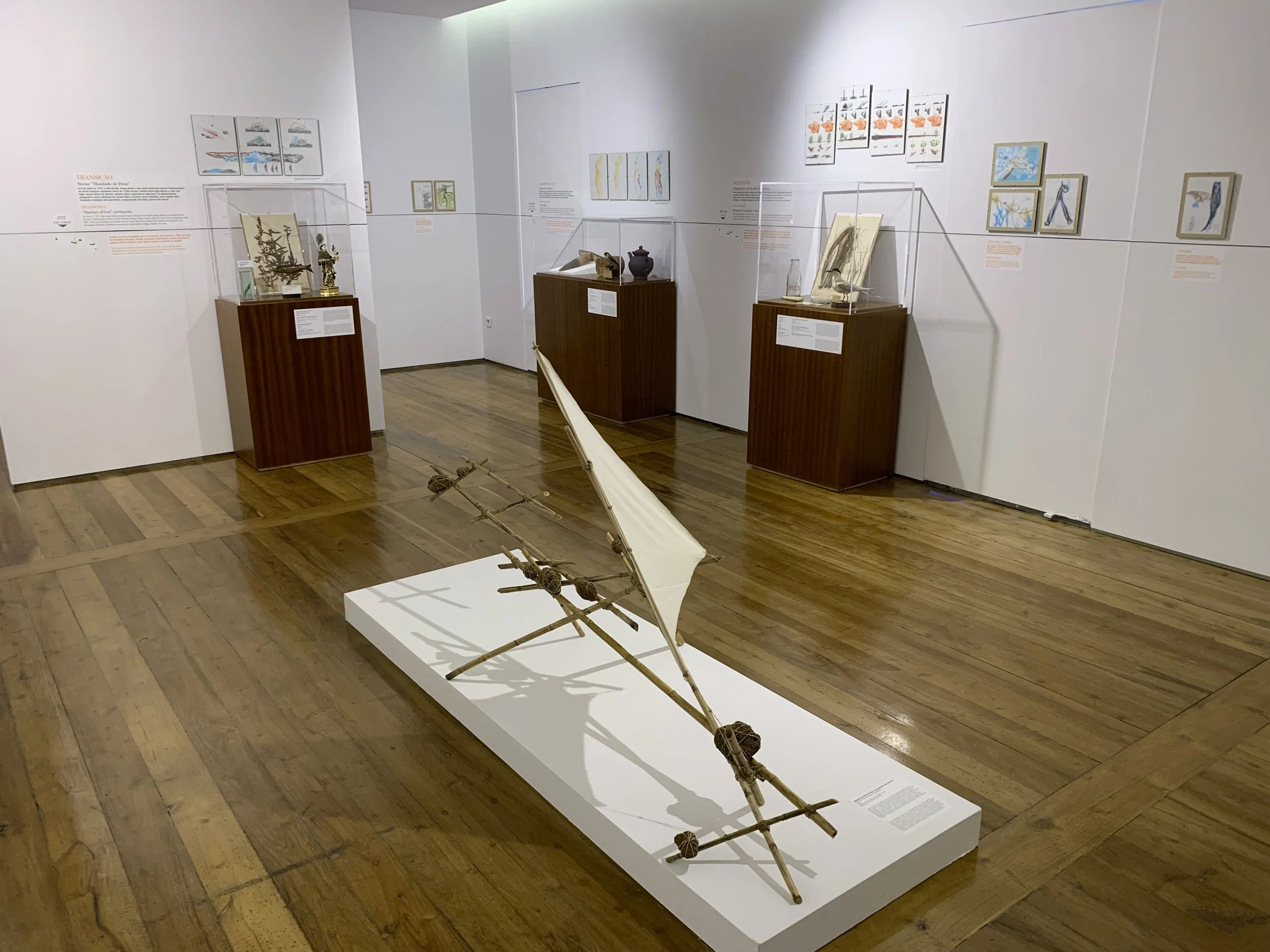
The Azores archipelago has long been shaped by catastrophe in the form of earthquakes, volcanic eruptions, tsunamis, storms, epidemics, crop blights, among other events. For this project, I selected six catastrophes—three earthquakes, two volcanic eruptions, and one agricultural collapse—that are considered to be among the most era-defining and transformative. Each is positioned chronologically on a timeline that runs across the gallery.
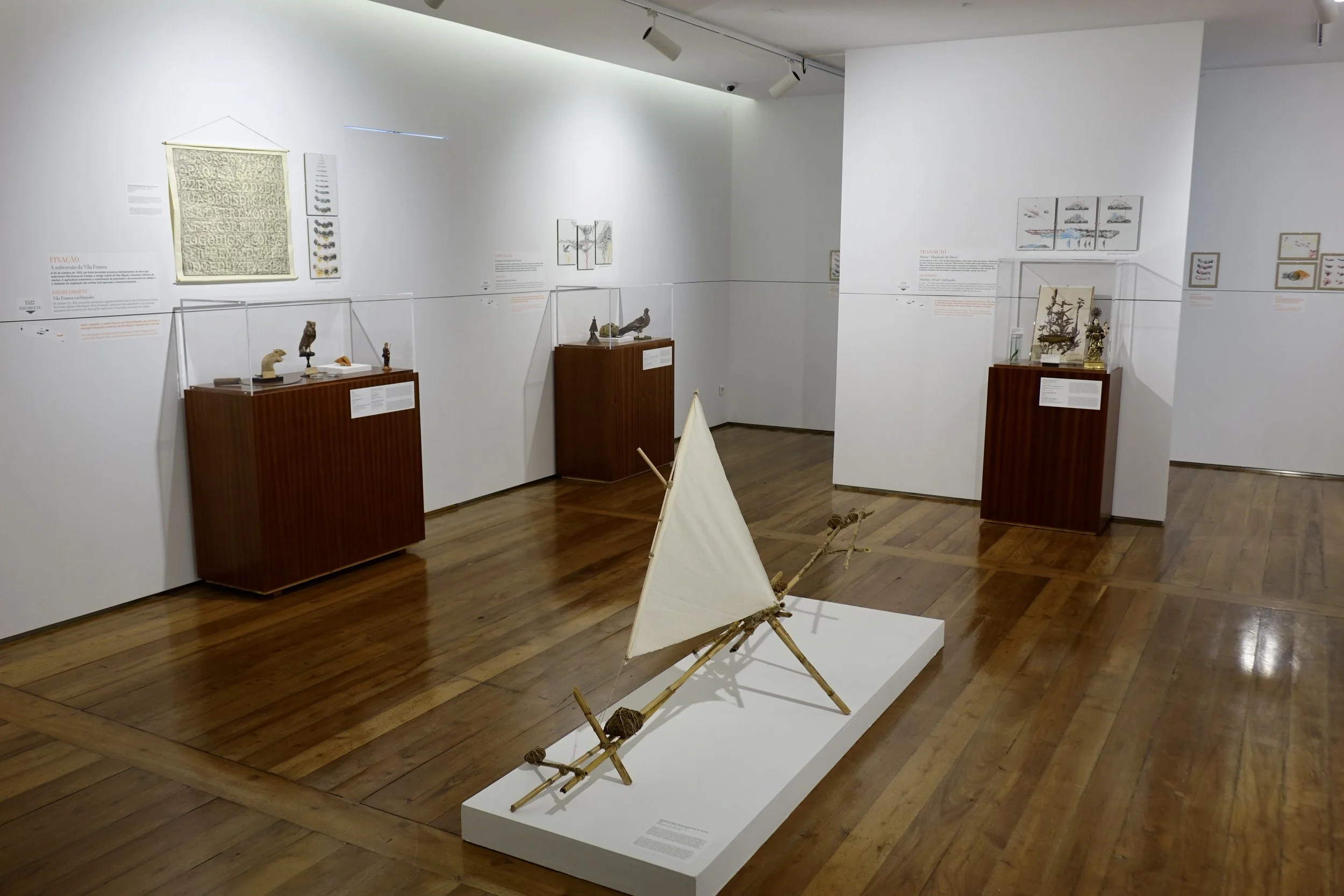
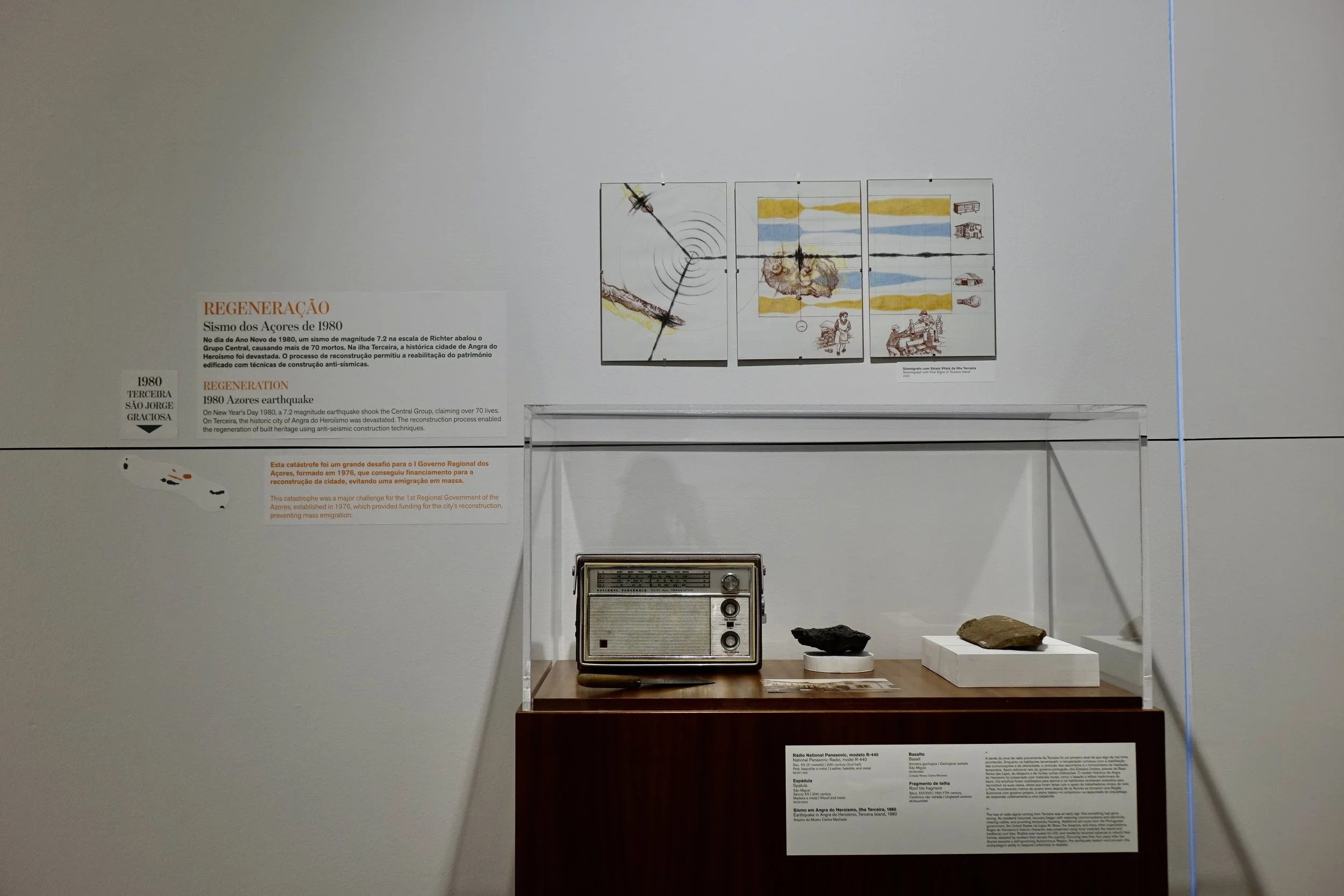
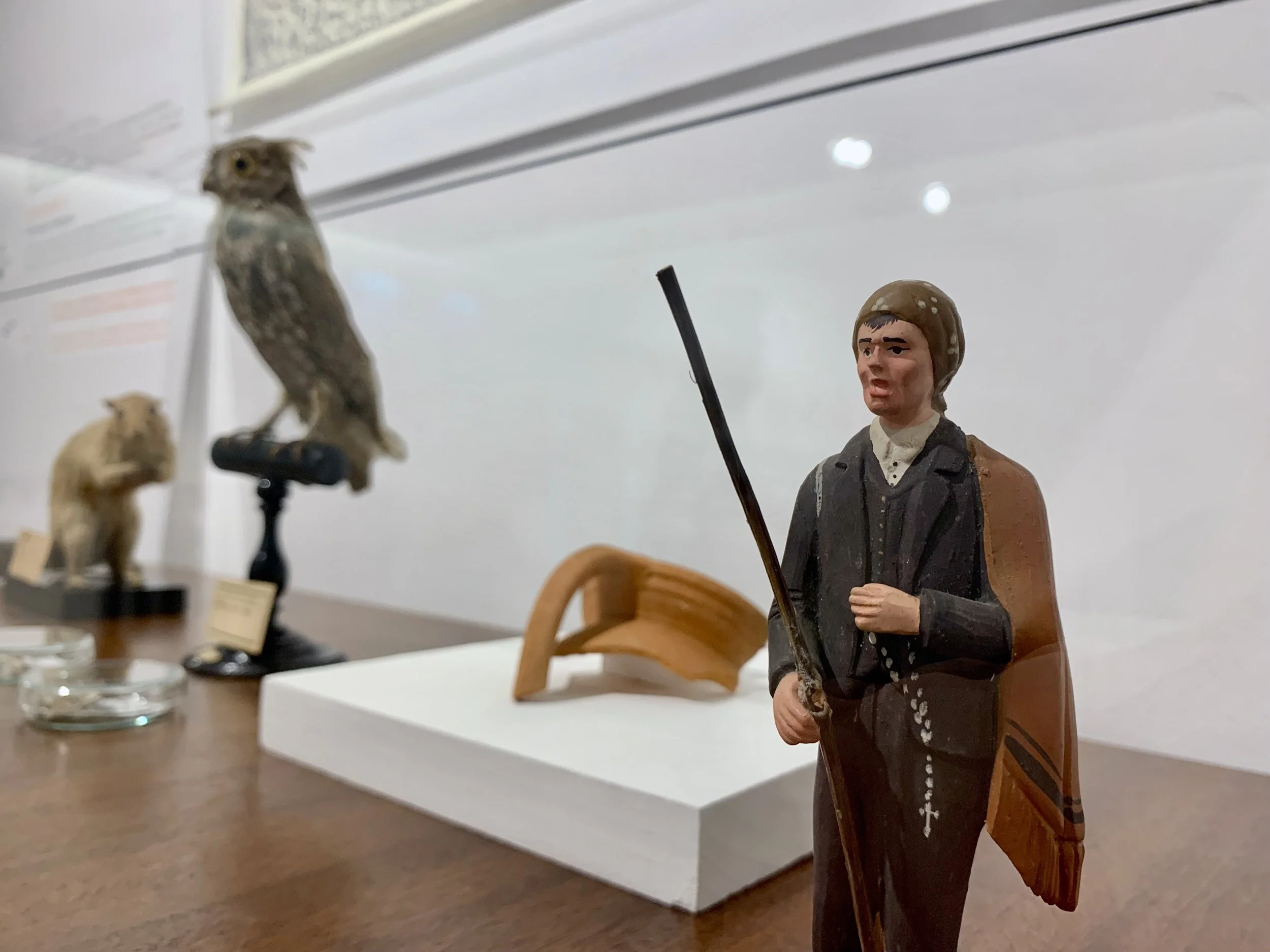
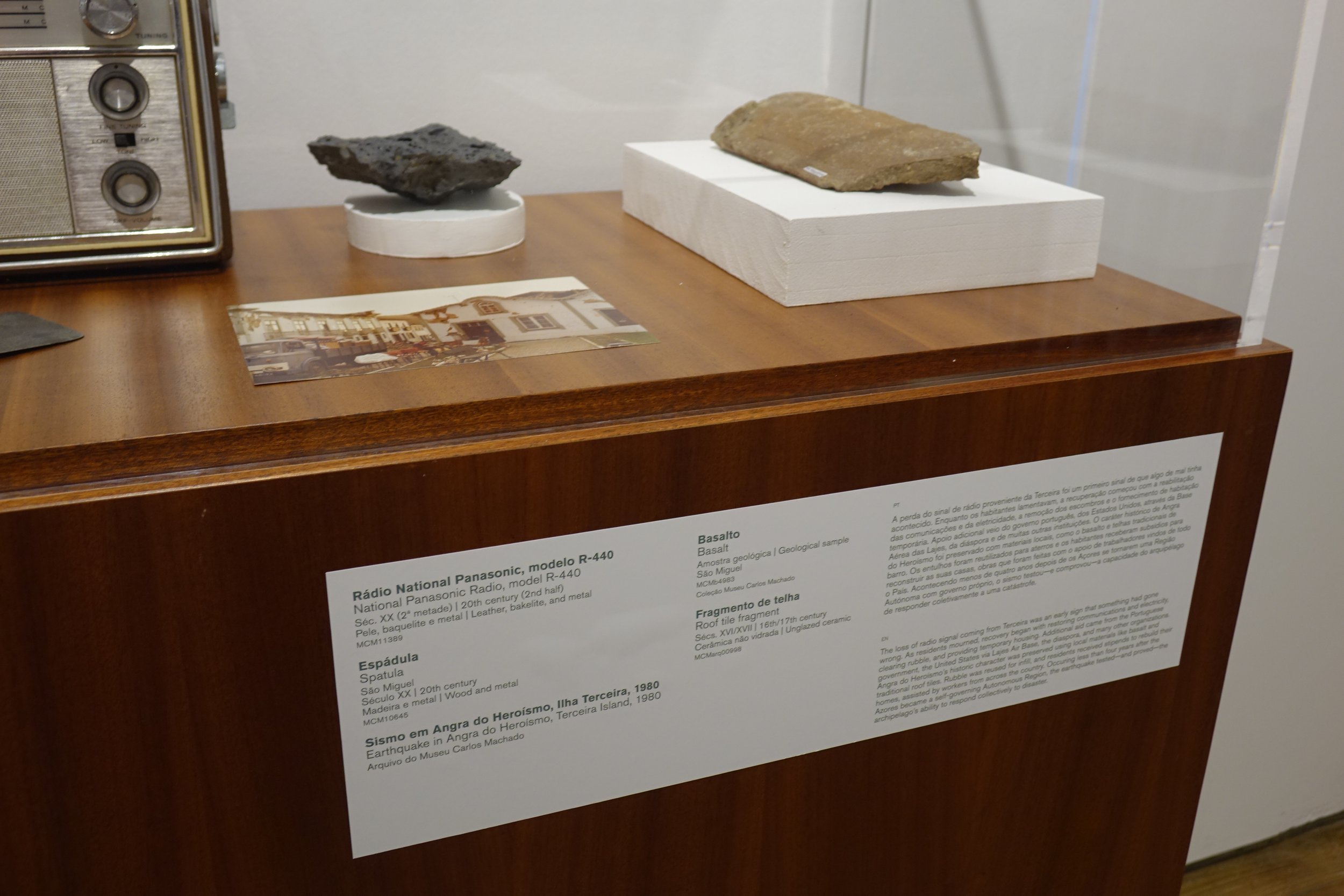
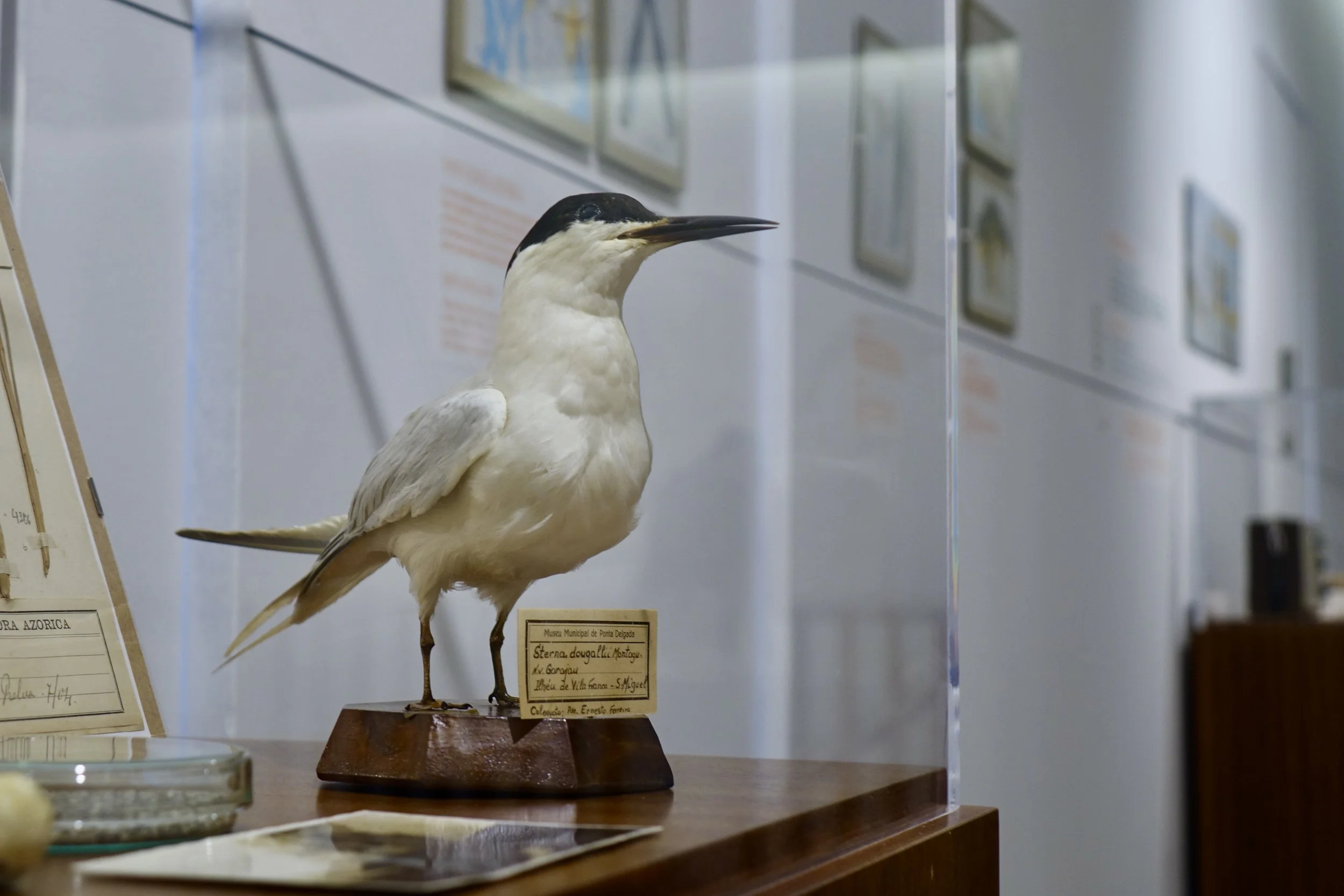
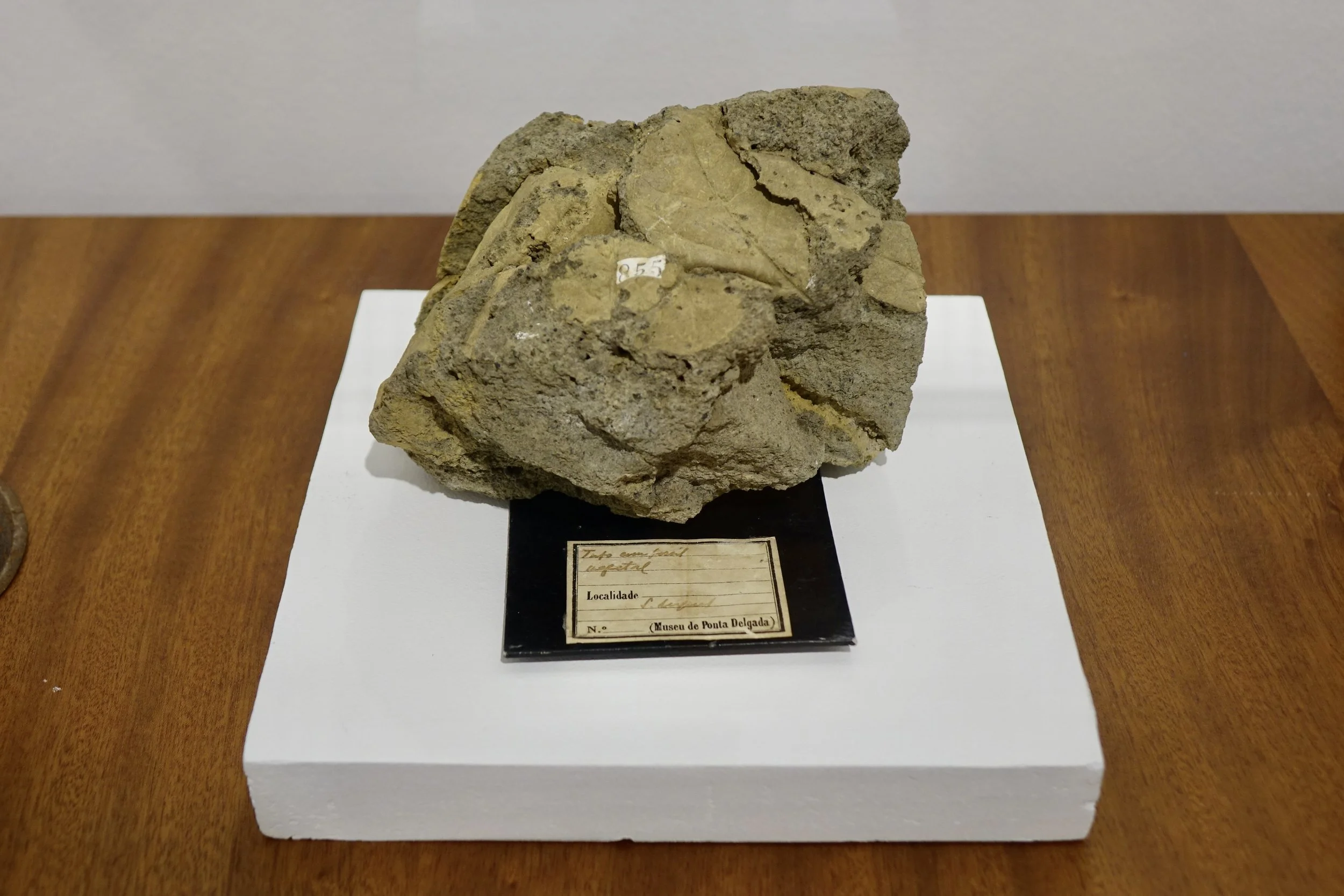
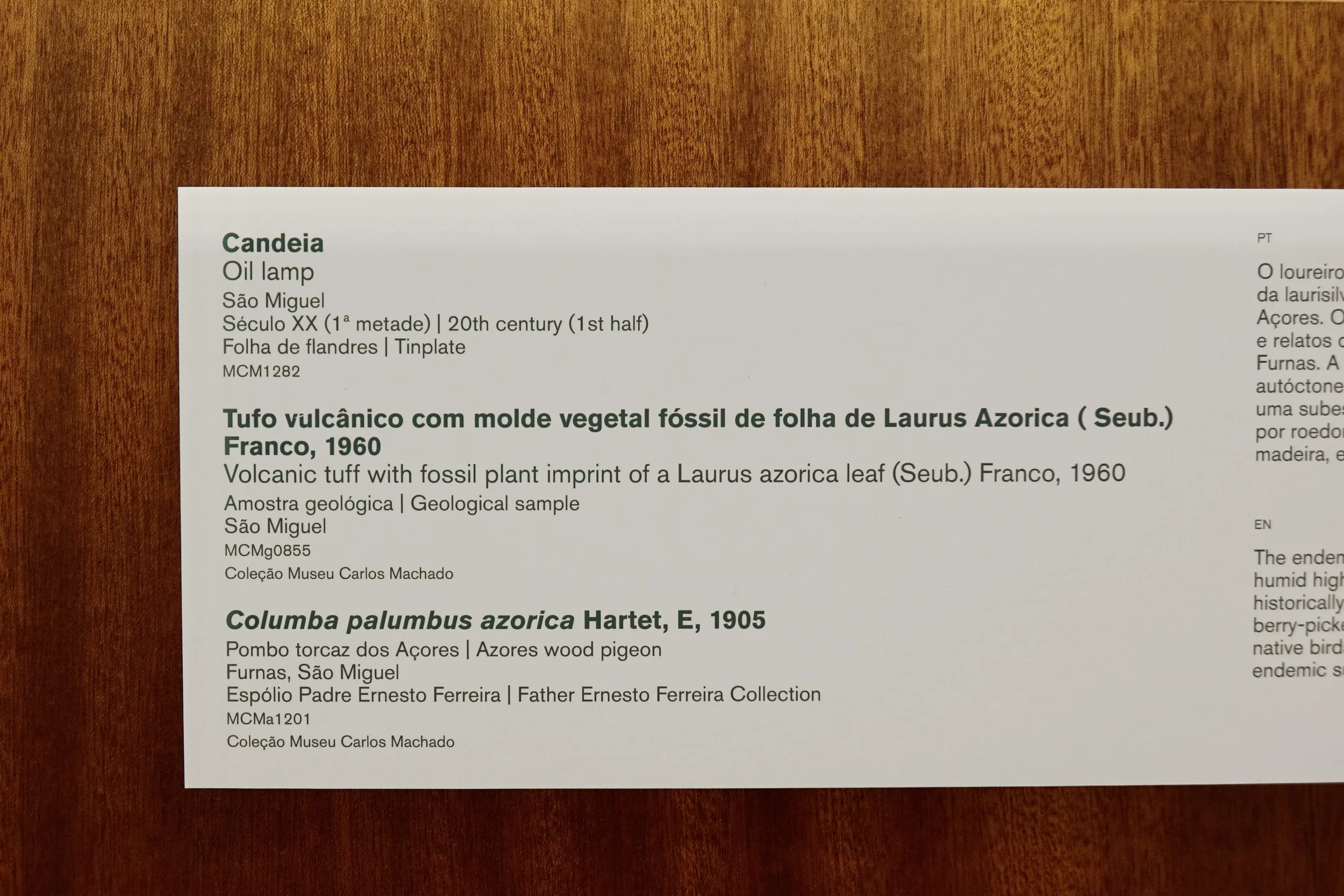
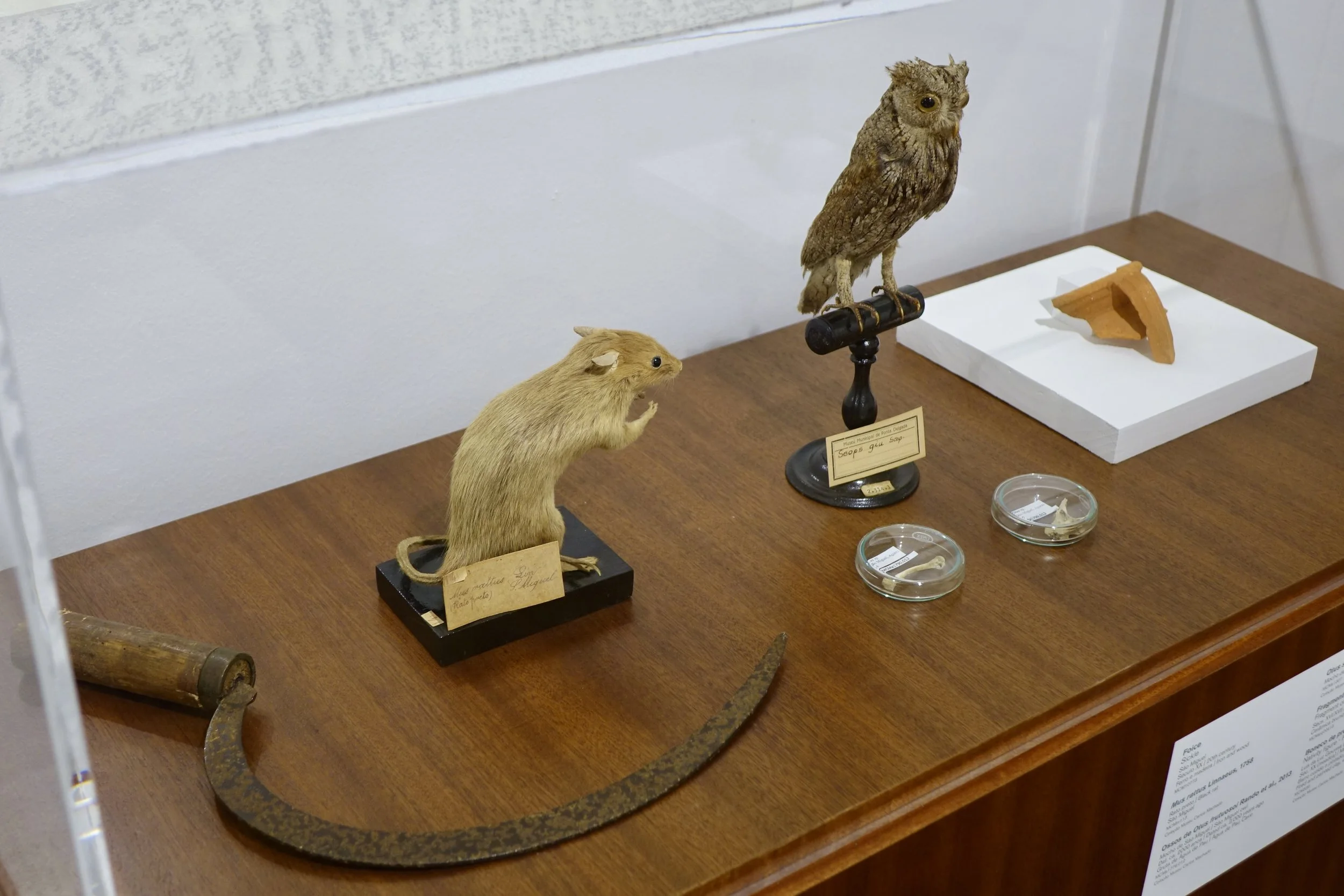
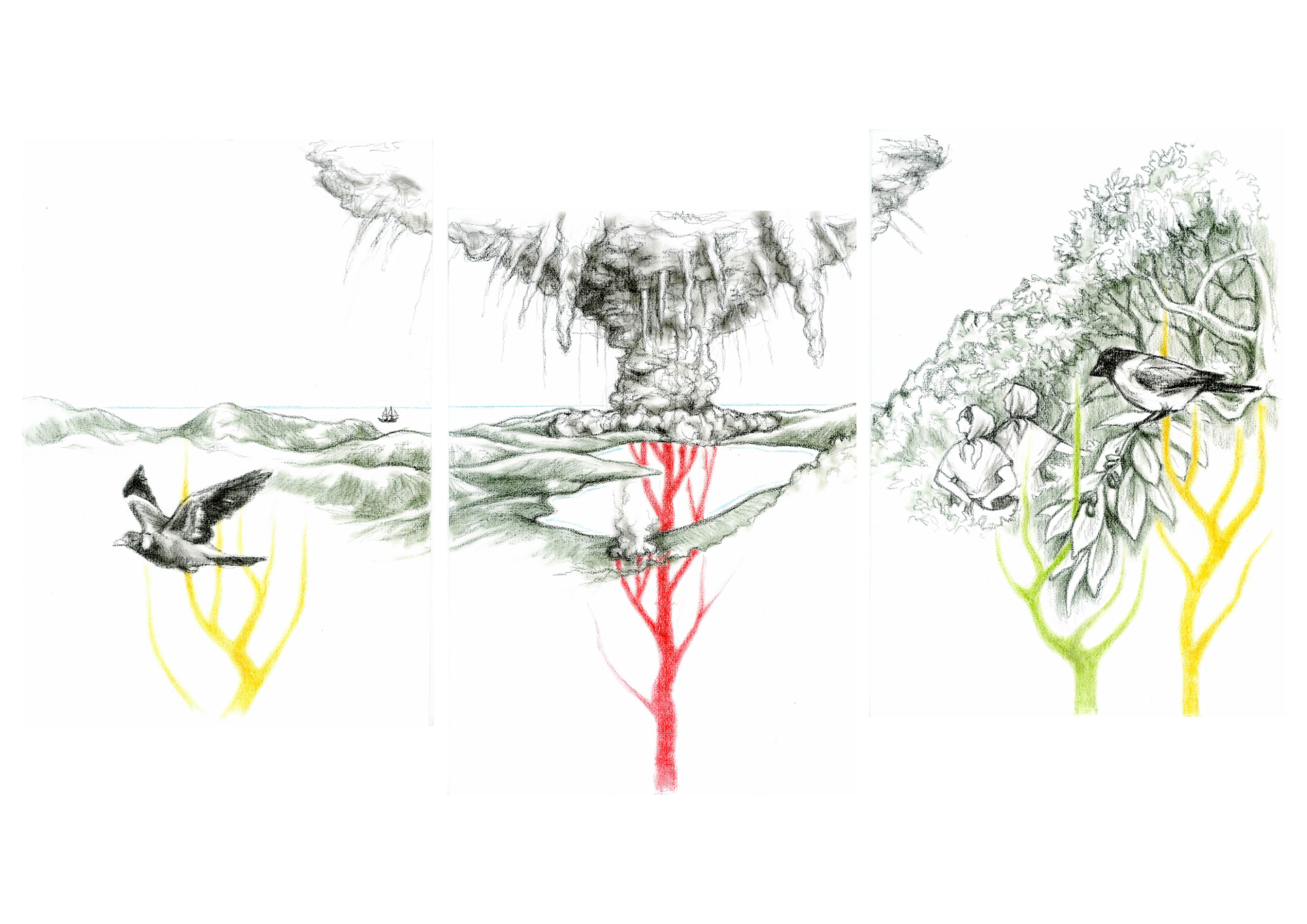
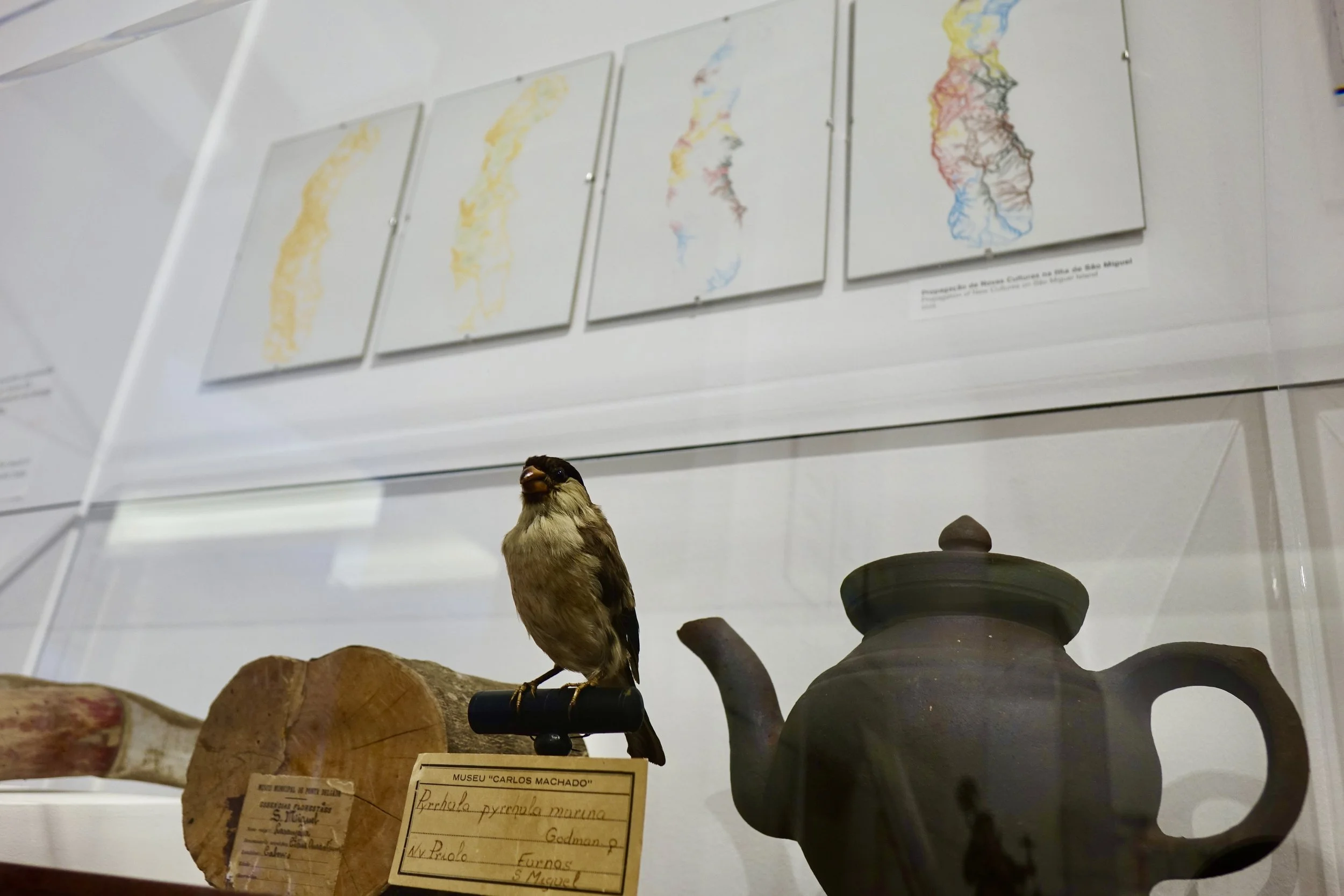
For each catastrophe, I chose a theme that connected its ecological and historical dimensions. For example, the theme “SUCCESSION”, selected for the 1957–58 eruption of Capelinhos Volcano on Faial Island, refers both to the ecological process of sequential colonization of barren land by plants, and to the migration of families to the United States and Canada following earlier Azorean diasporas. With the help of the museum staff, I selected and assembled objects from the museum's diverse collections—including natural history, ethnography, archaeology, religious art, and photography—to support this narrative. A central curatorial goal was to unite these distinct collections into a coherent narrative bridging human and “natural” histories.
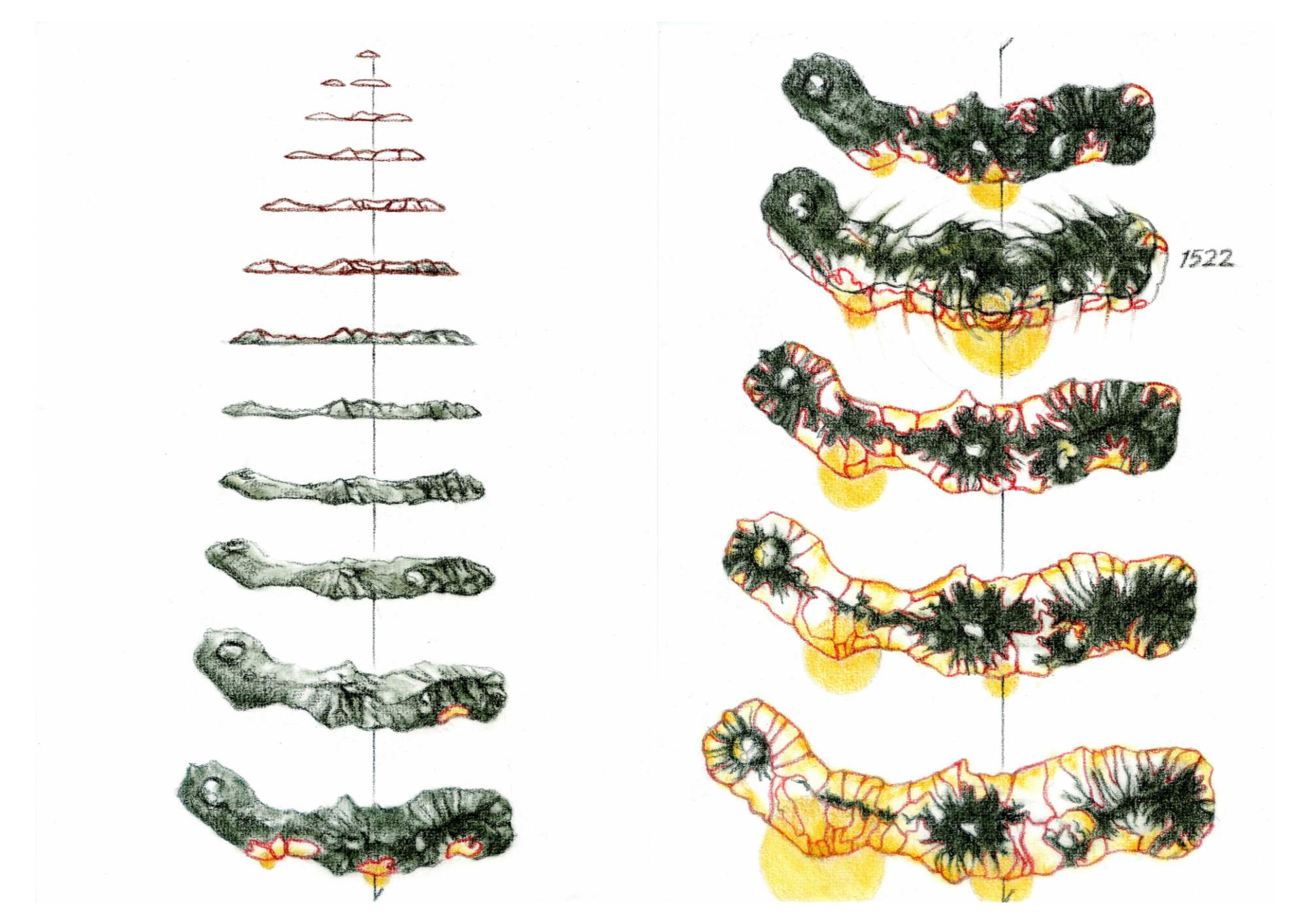
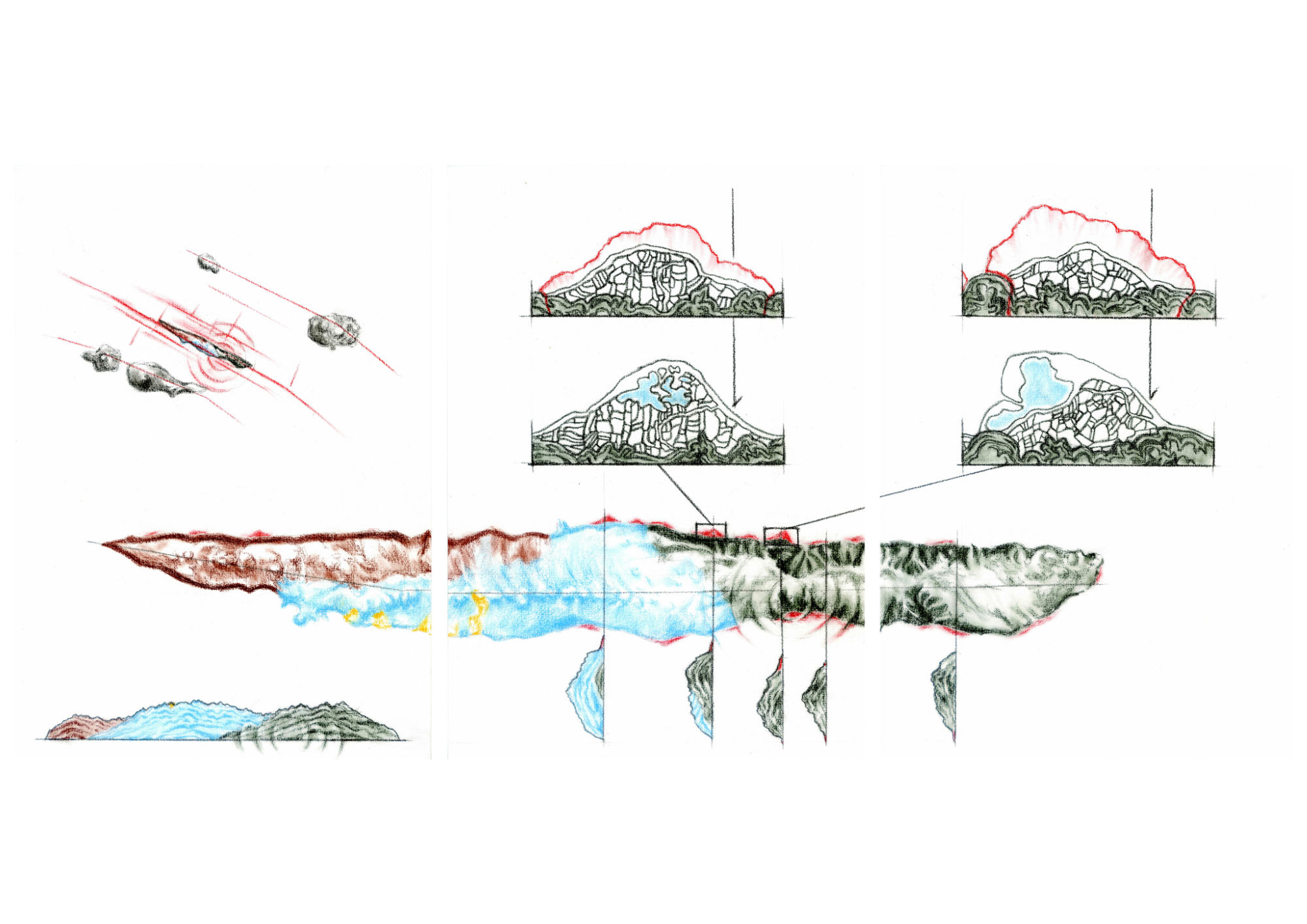
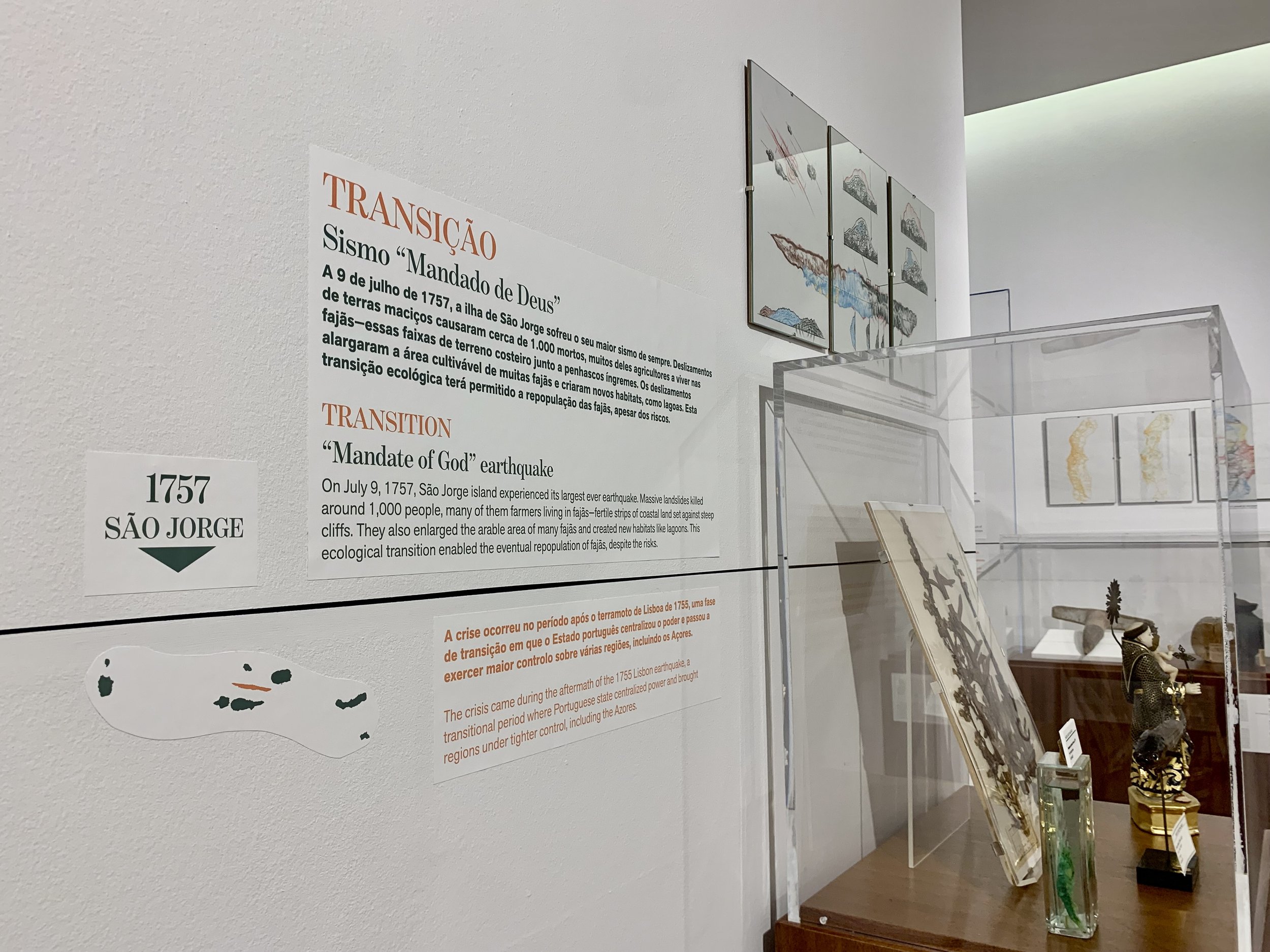
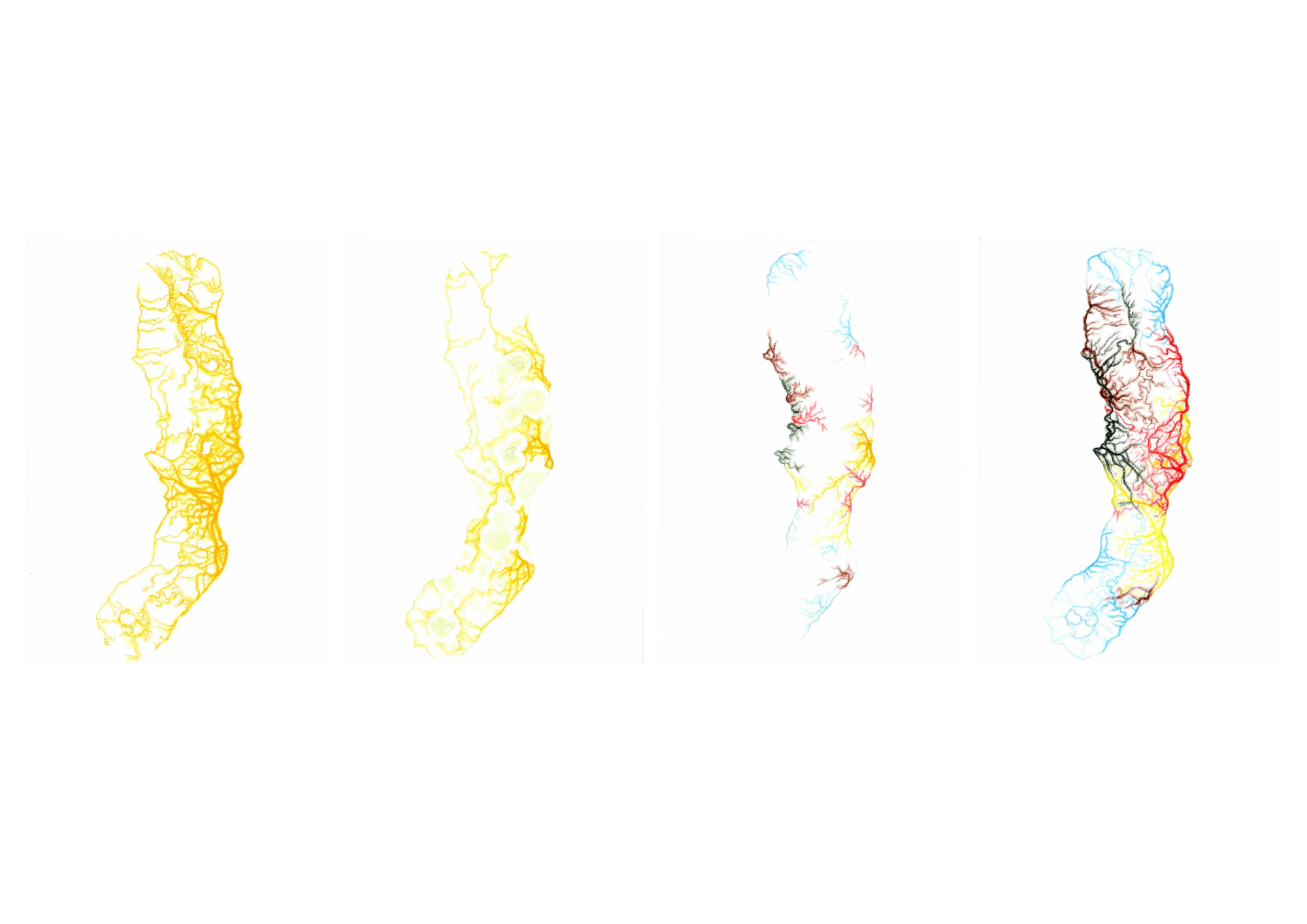
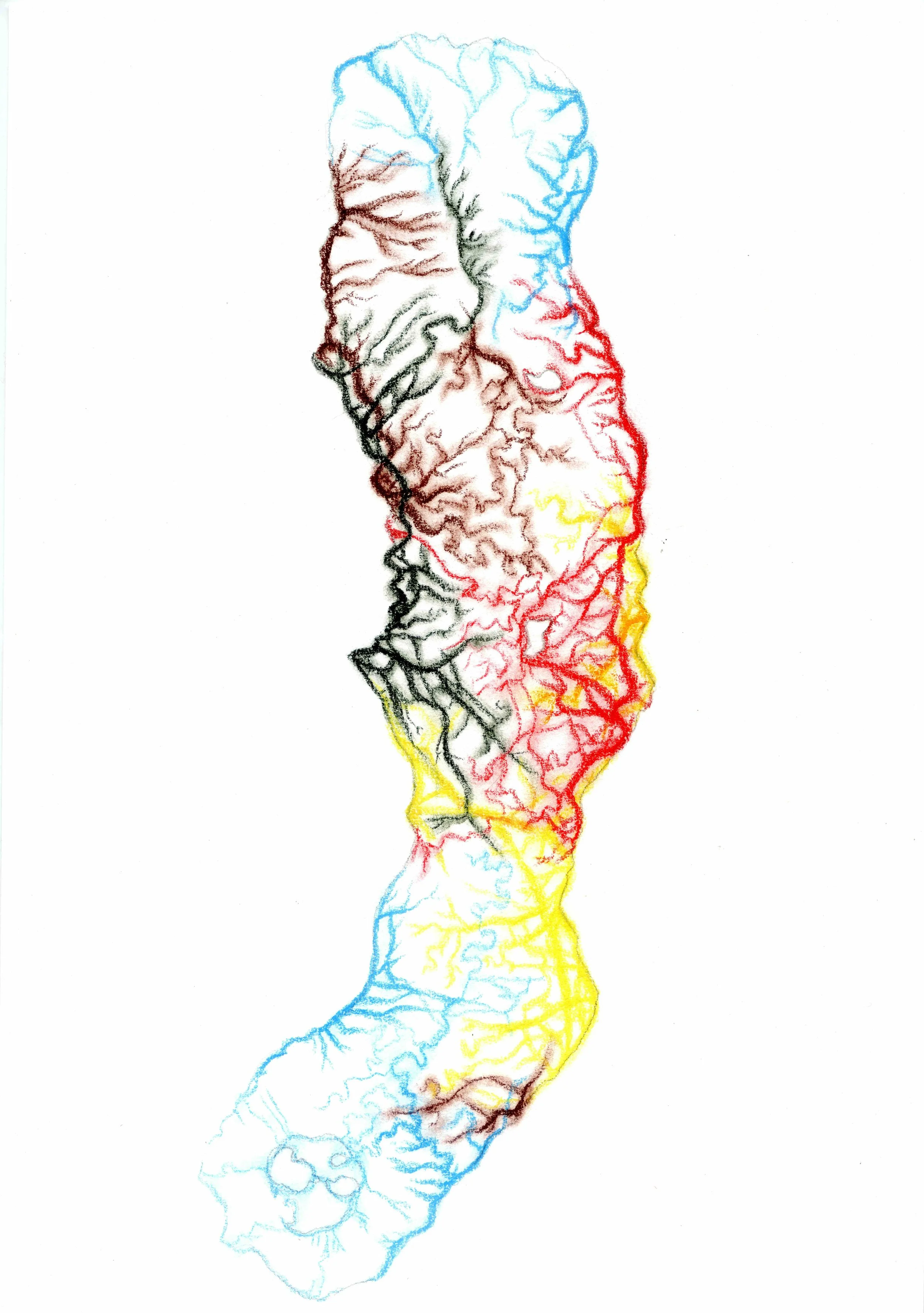
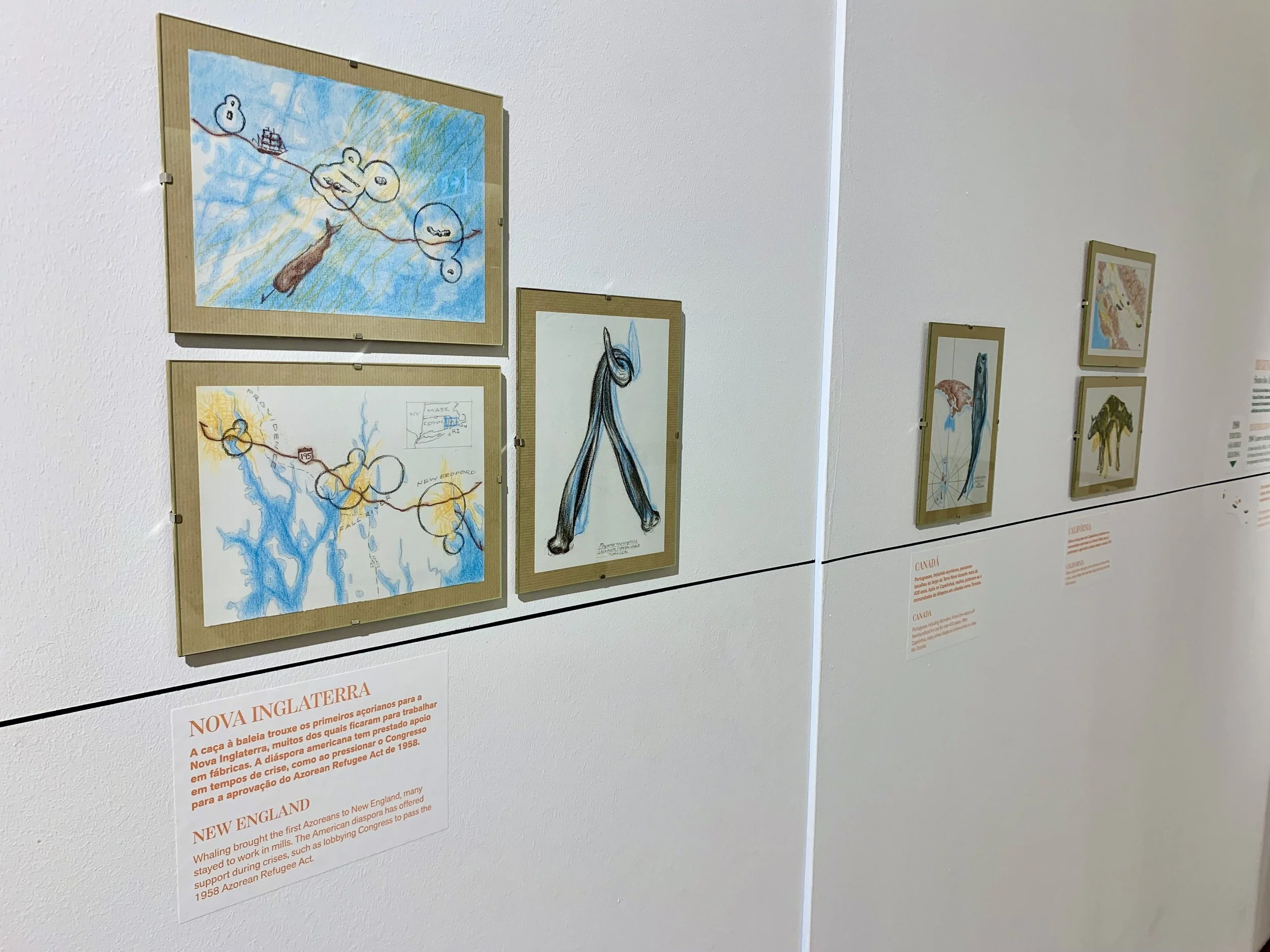
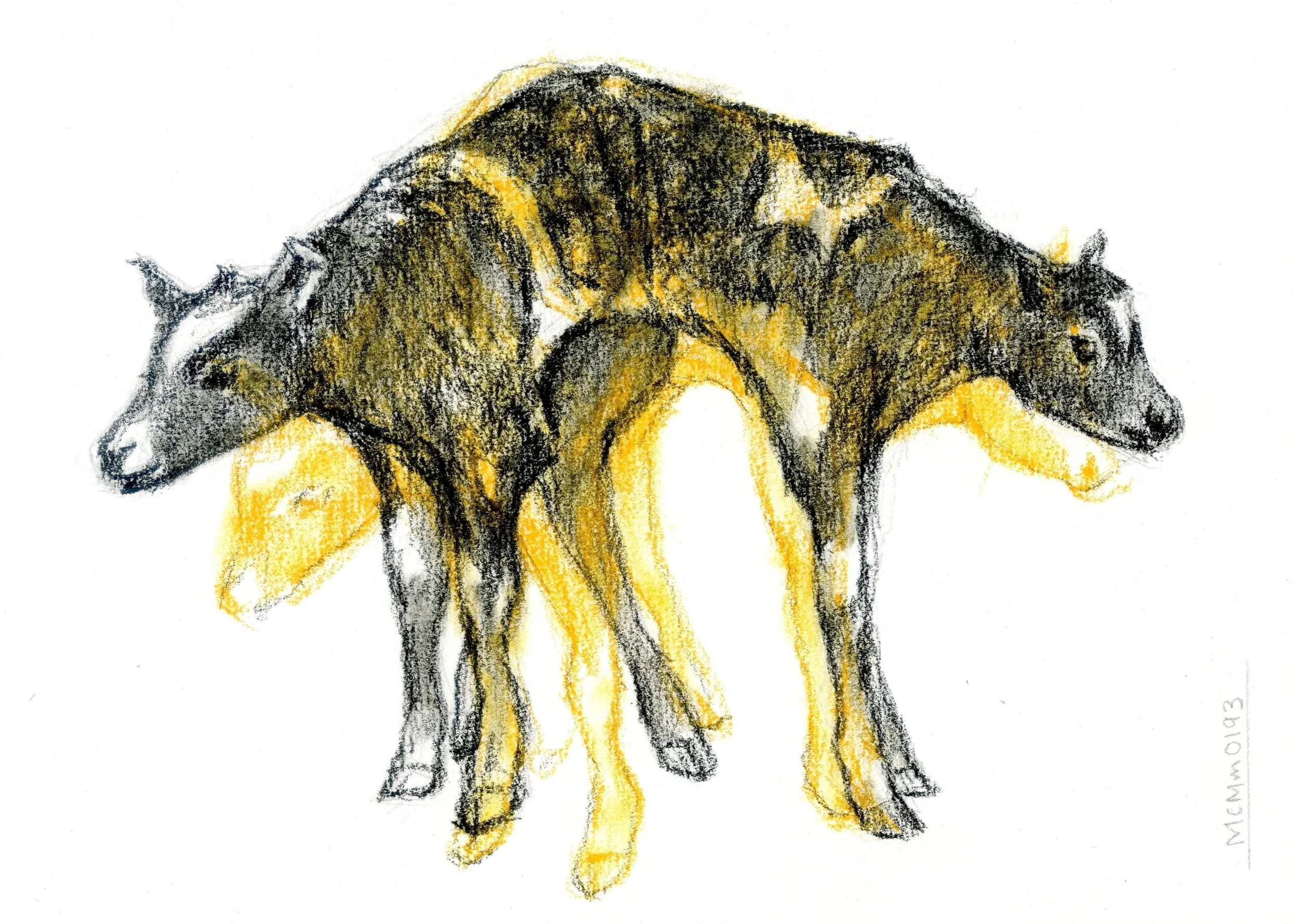
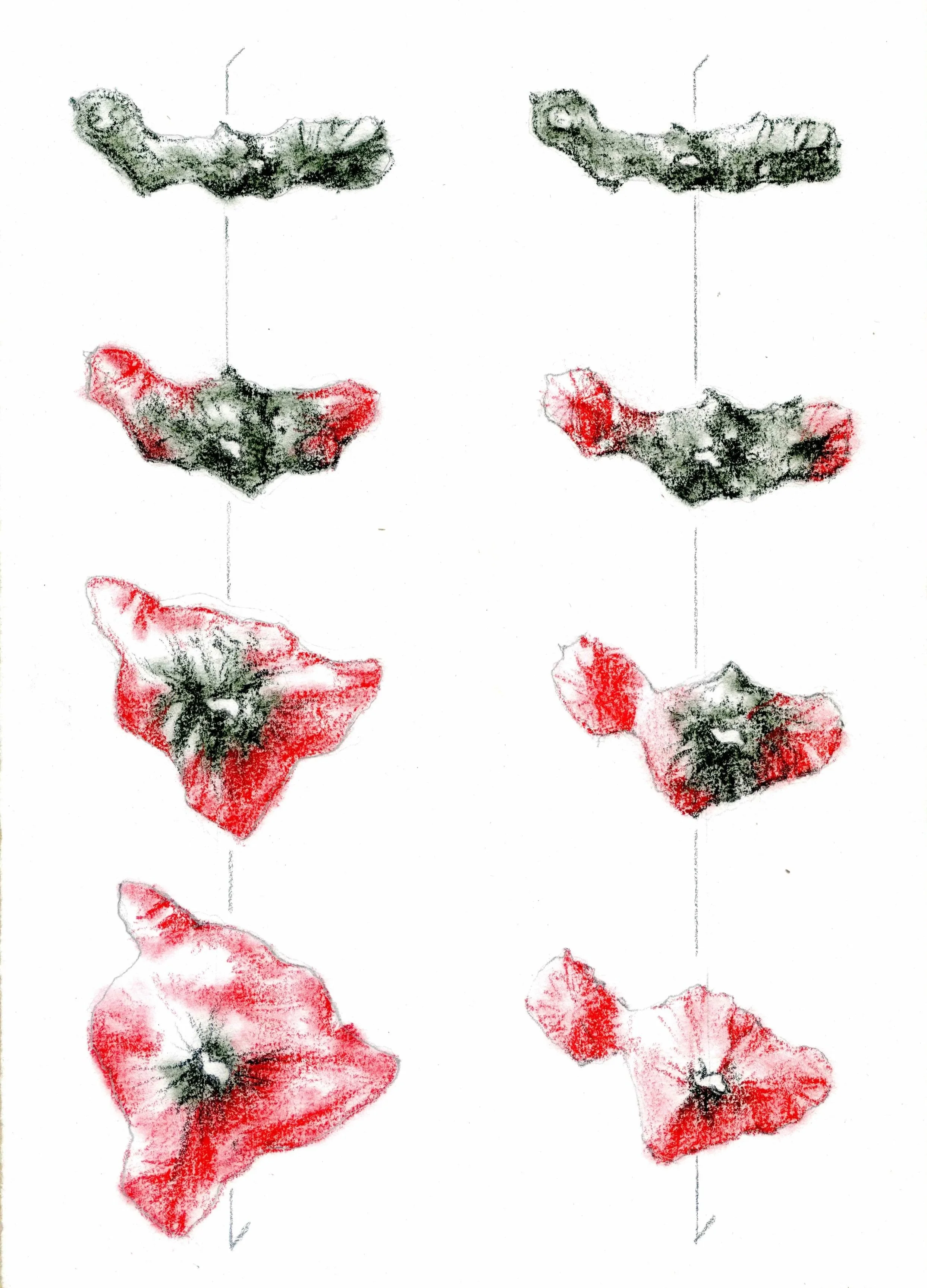
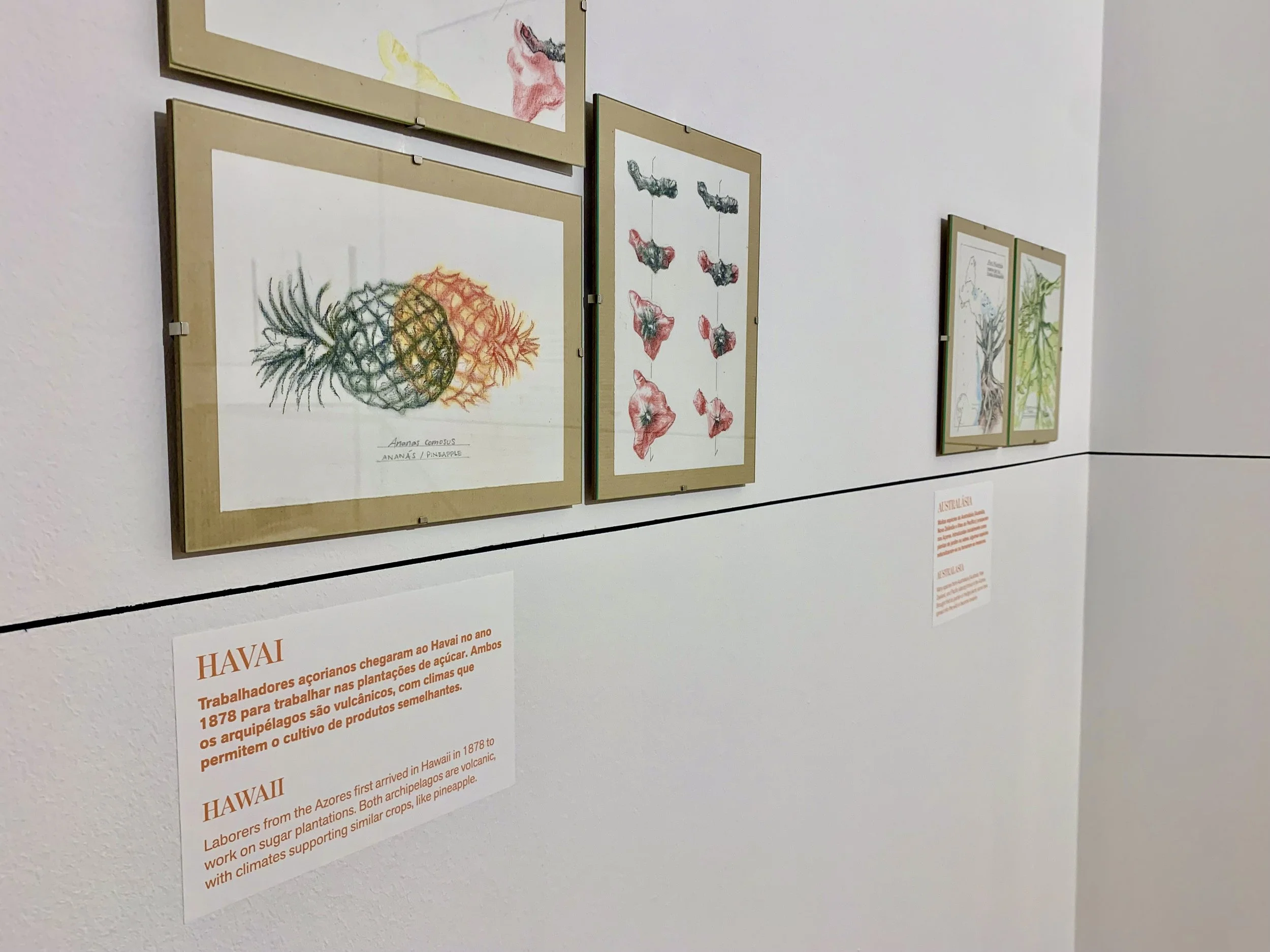
Each event is further interpreted through a series of drawings—inspired by the visual languages of biology and ecology—to depict key environmental transformations. Another collection of drawings, placed at different points along the timeline, highlights the Azores’ connection with other parts of the world (via empire, migration, species exchange, etc.) and how these connections shaped both vulnerability and recovery.
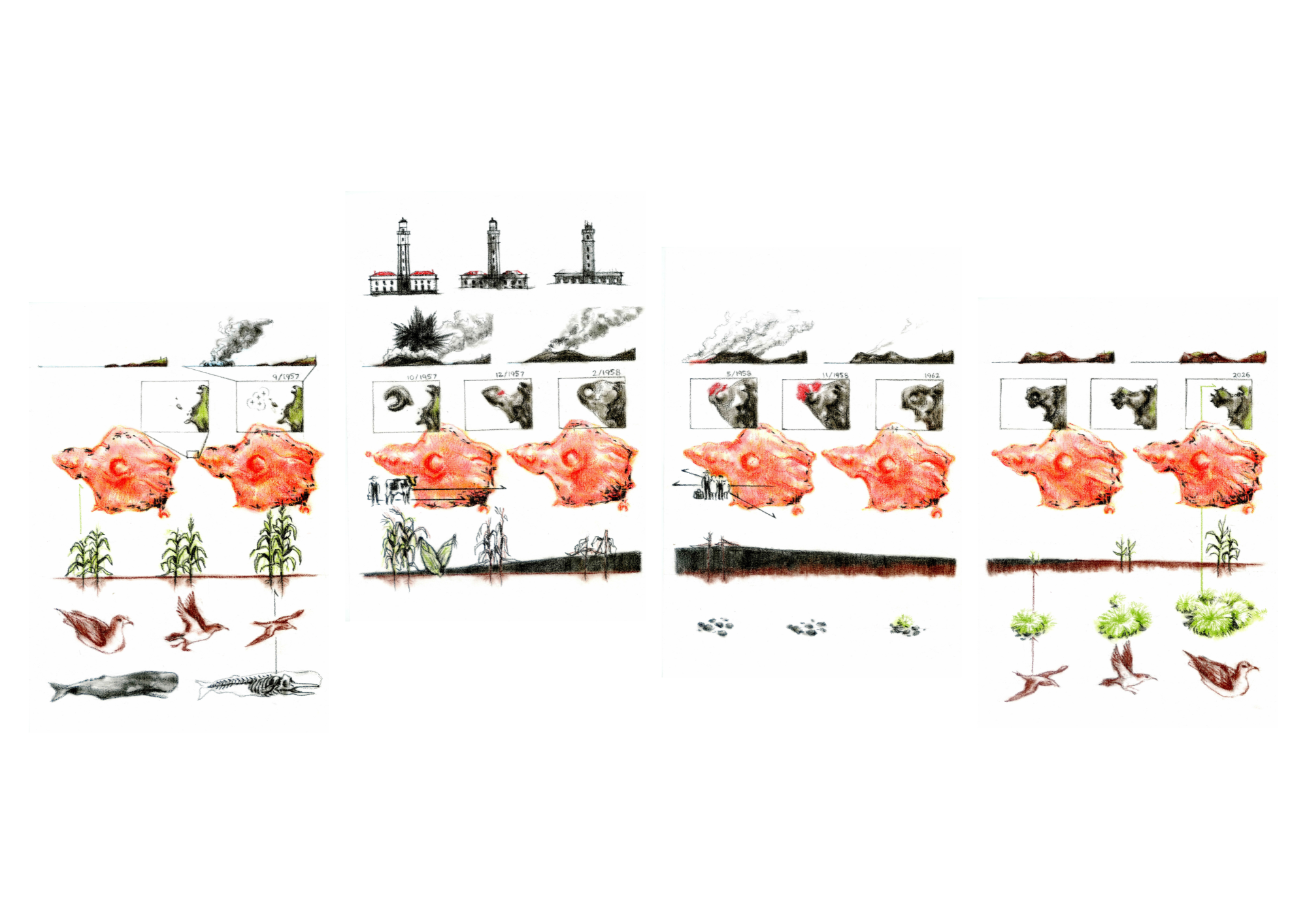
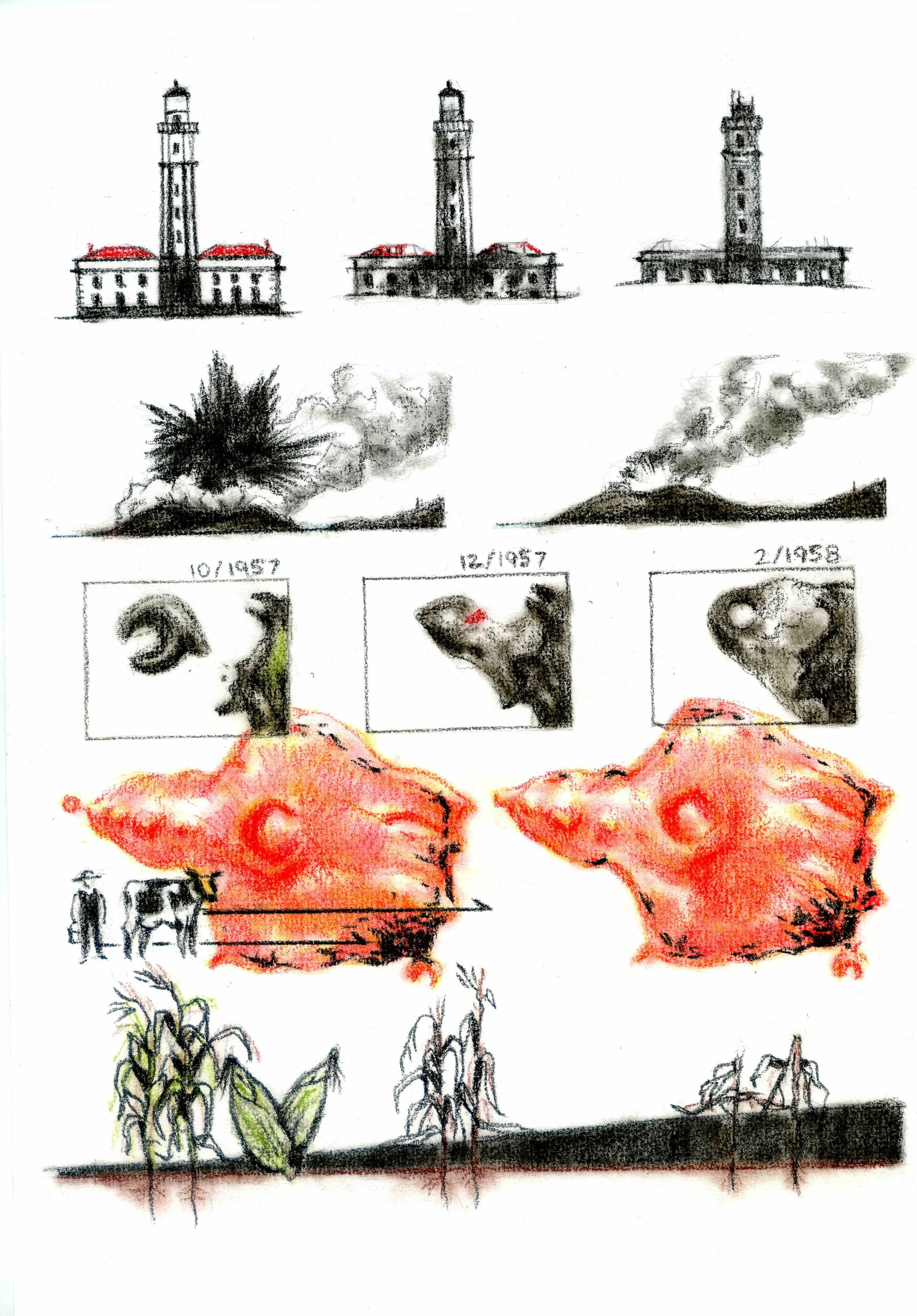
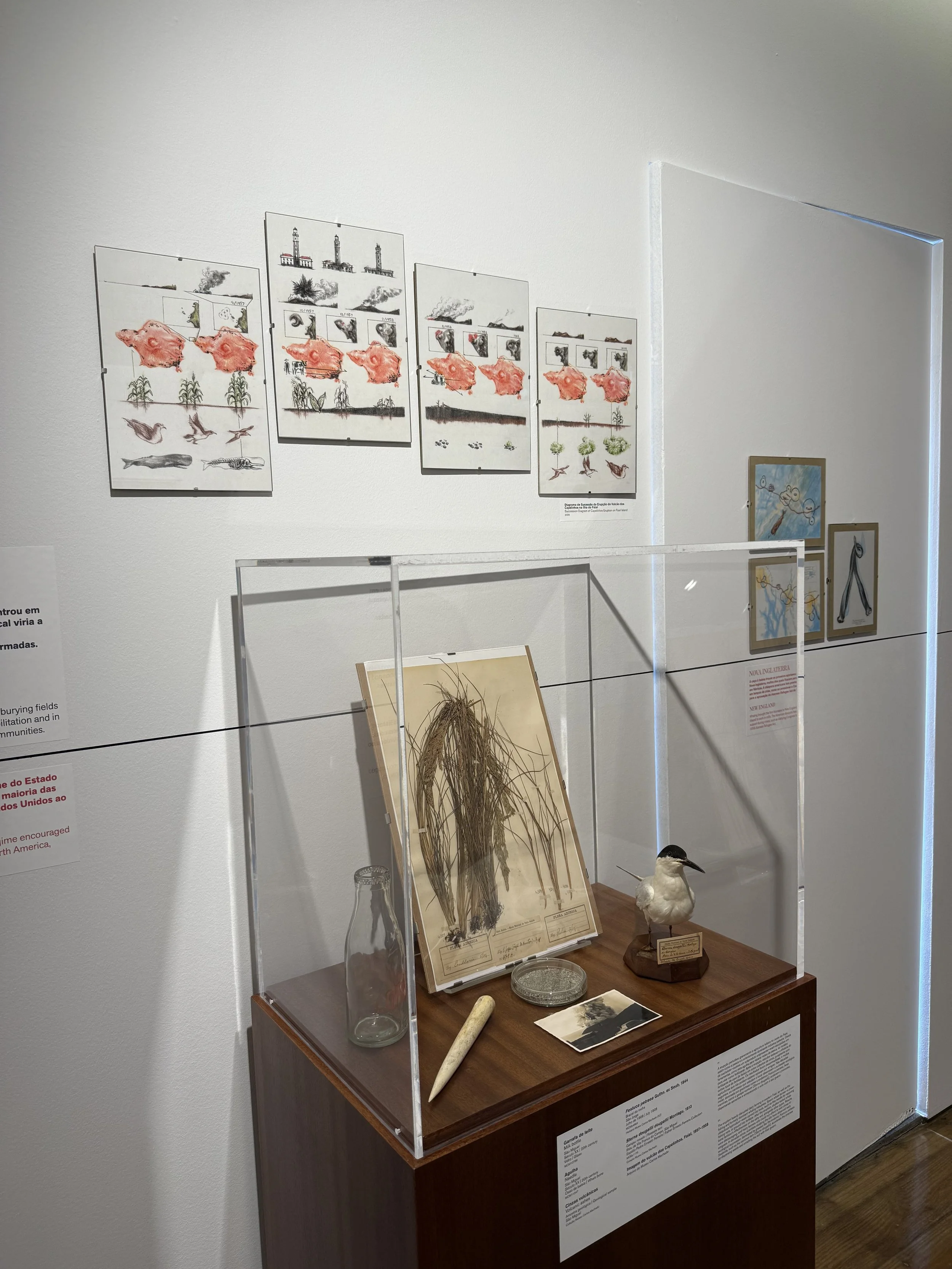
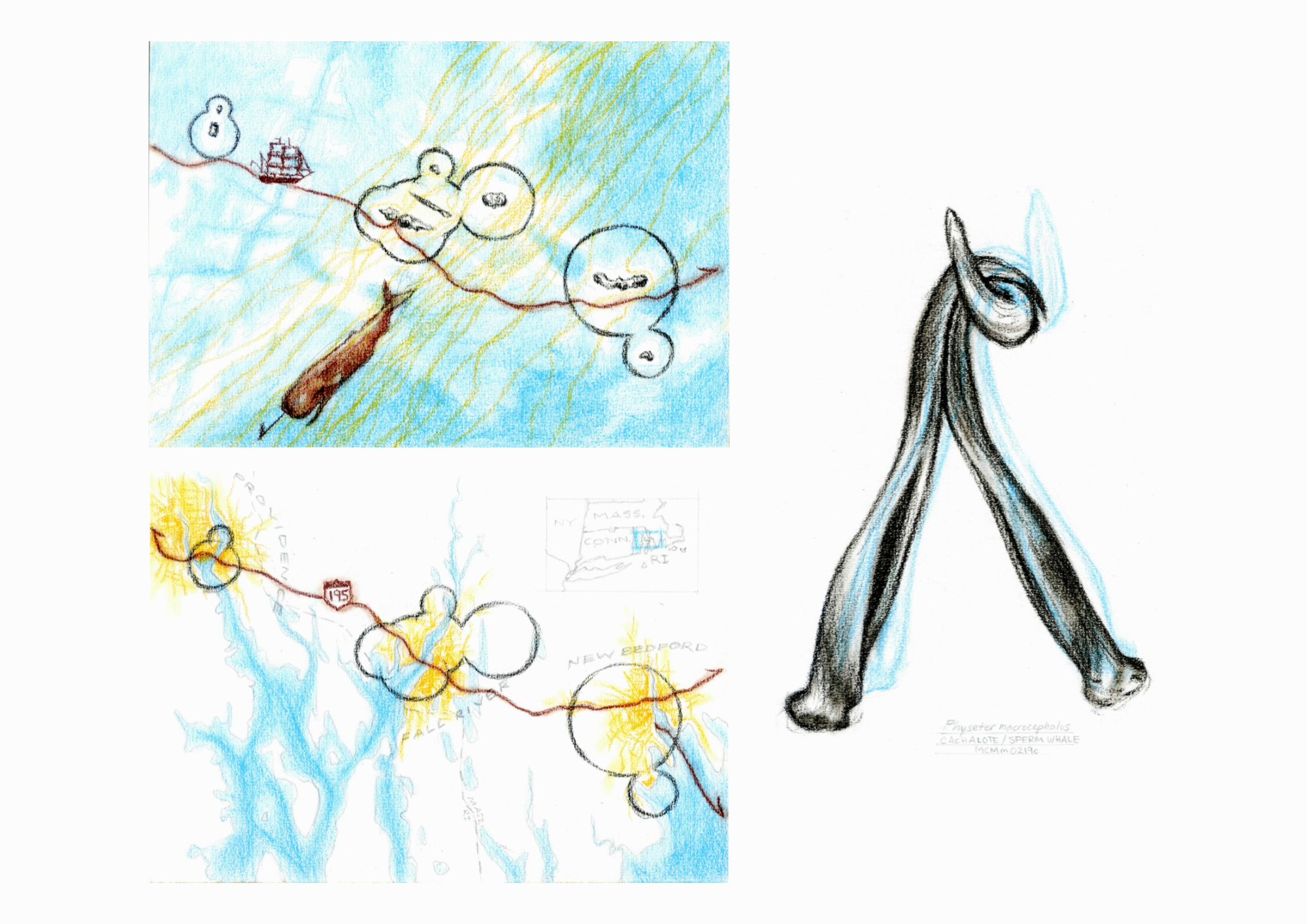
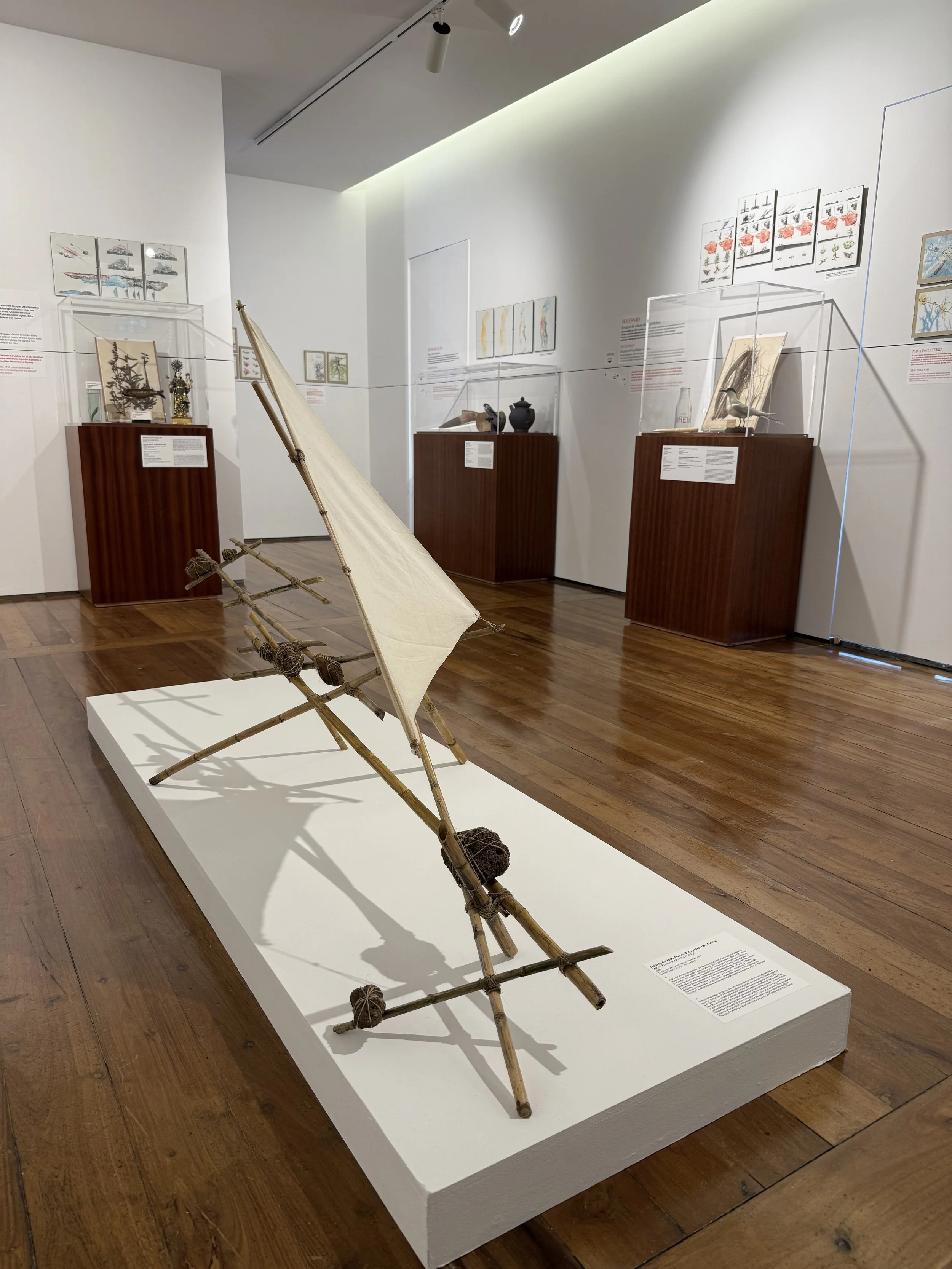
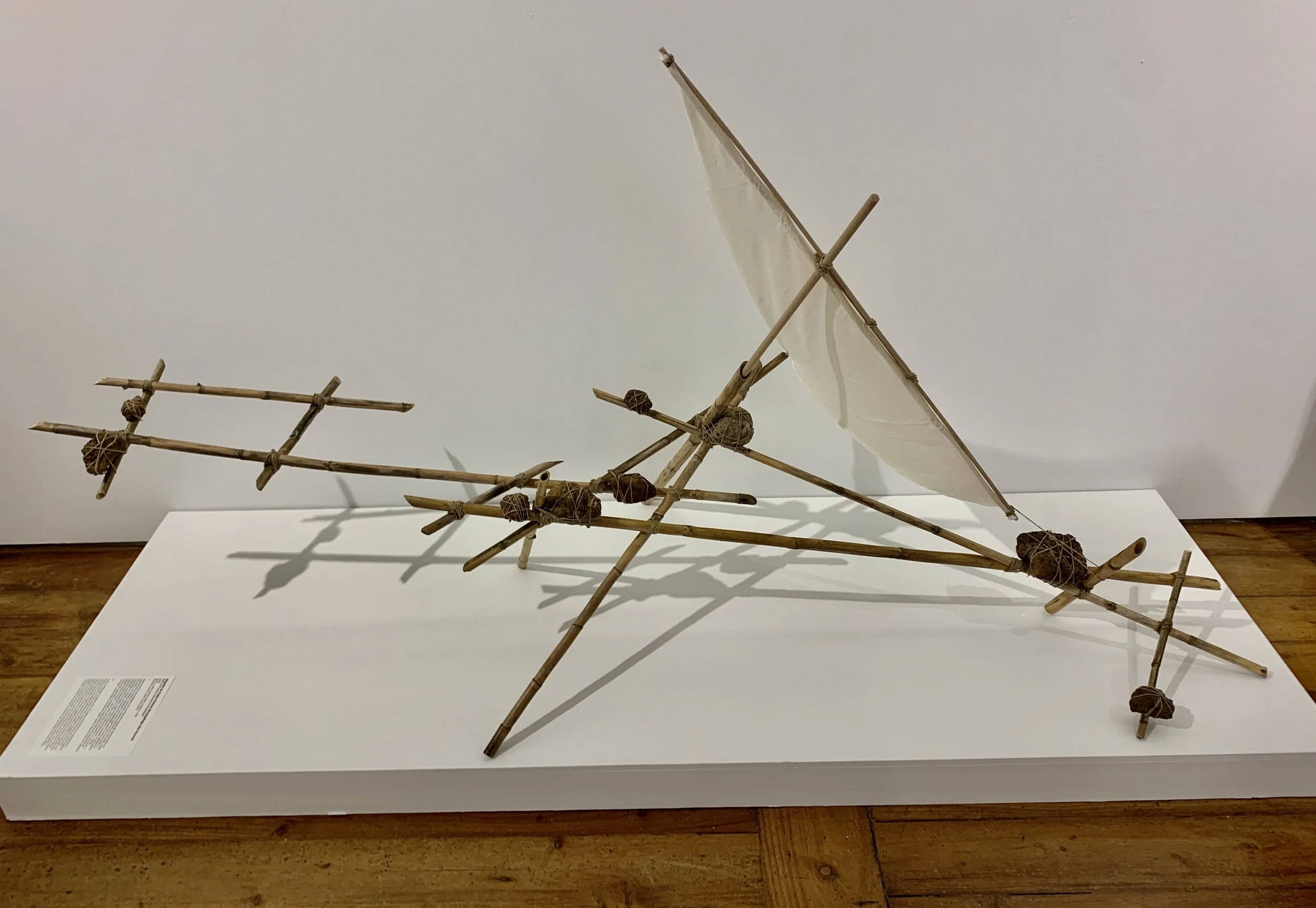
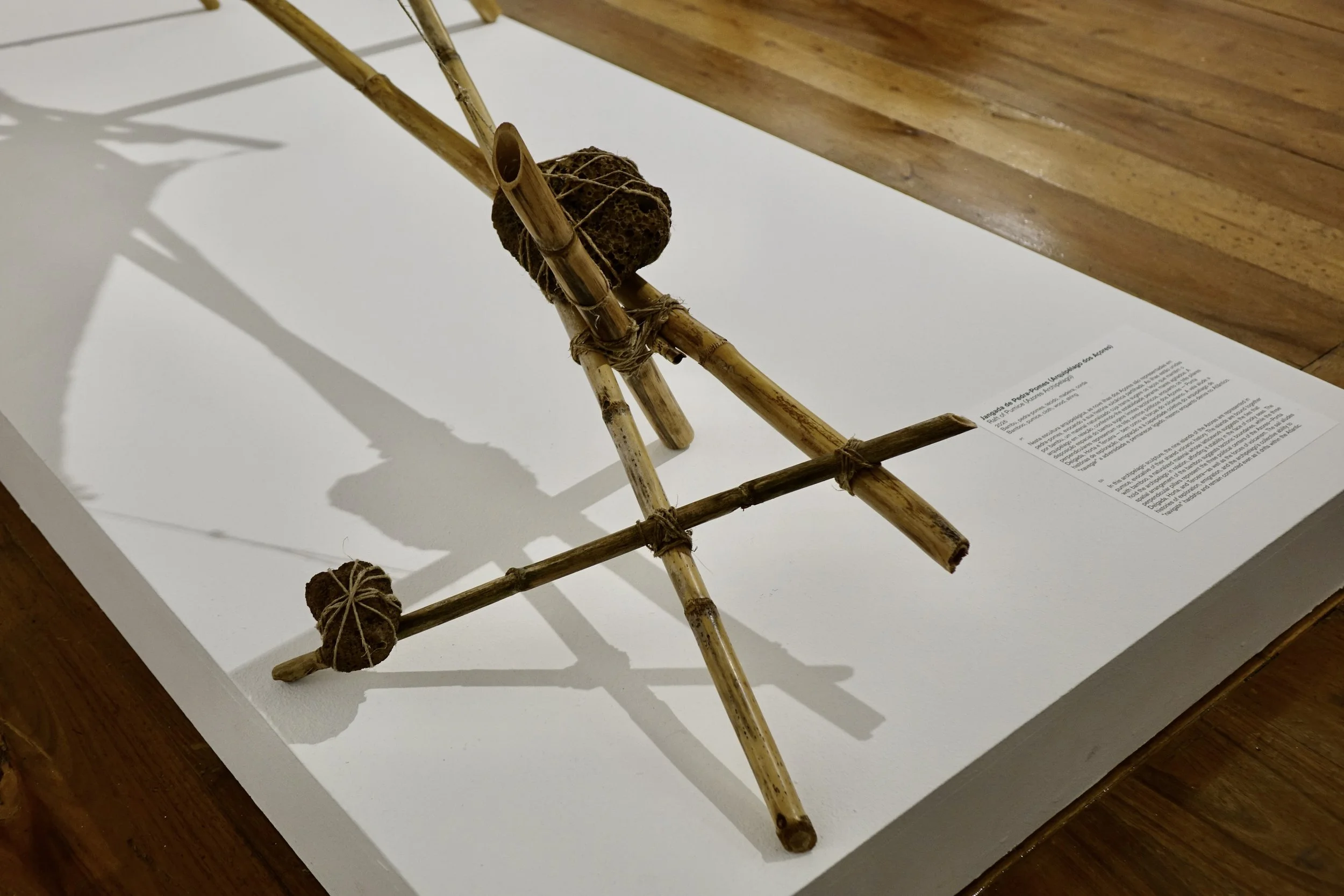
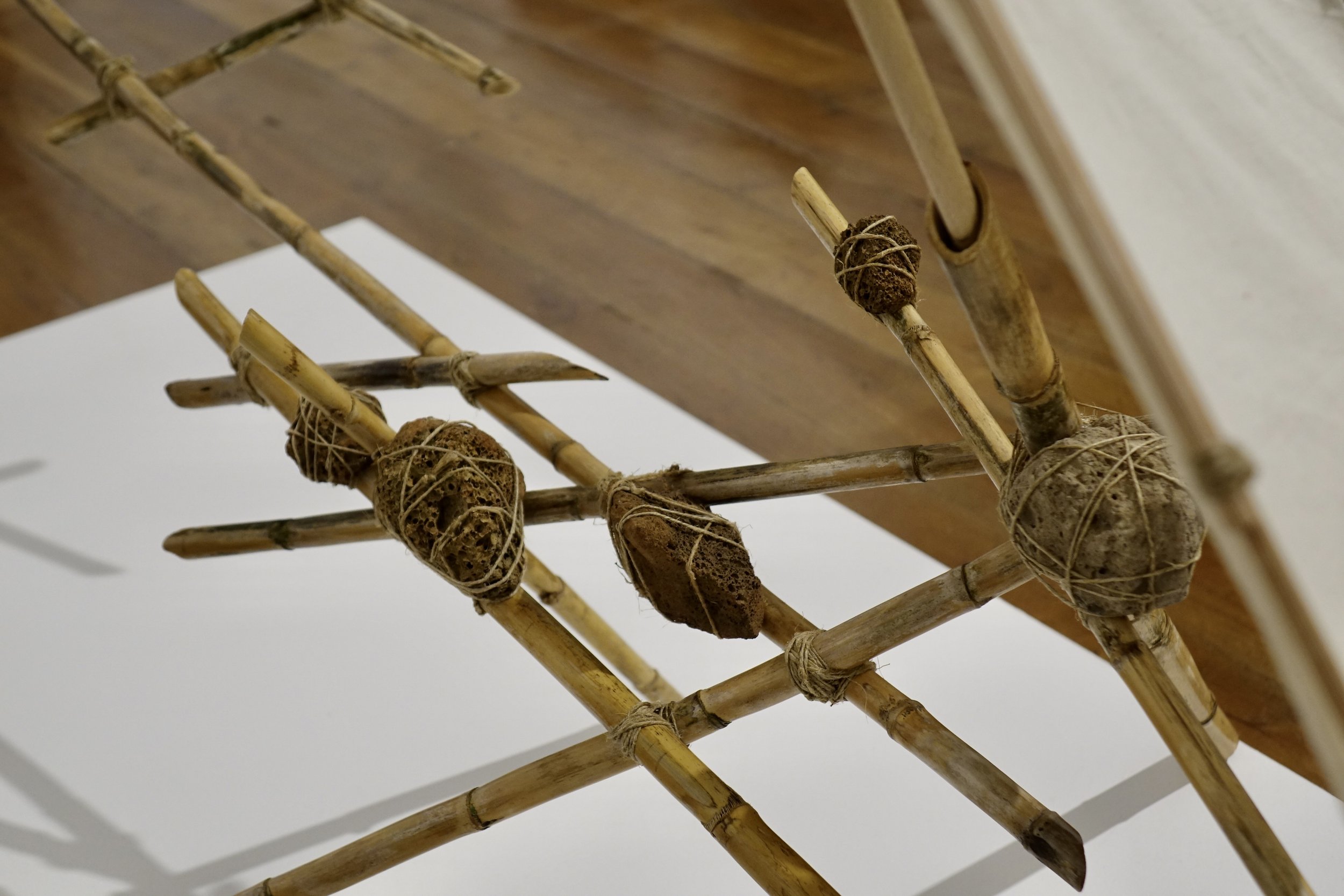
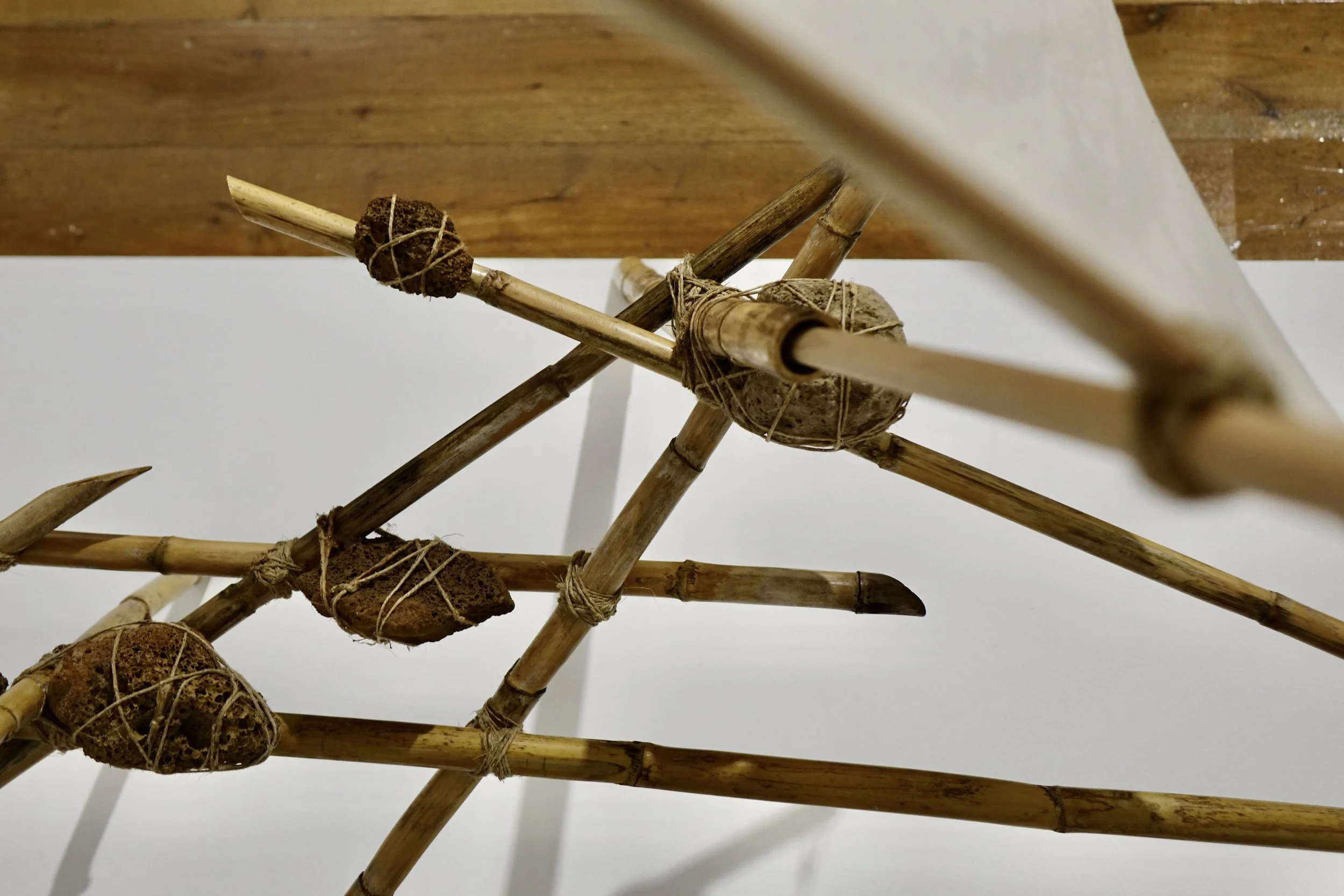
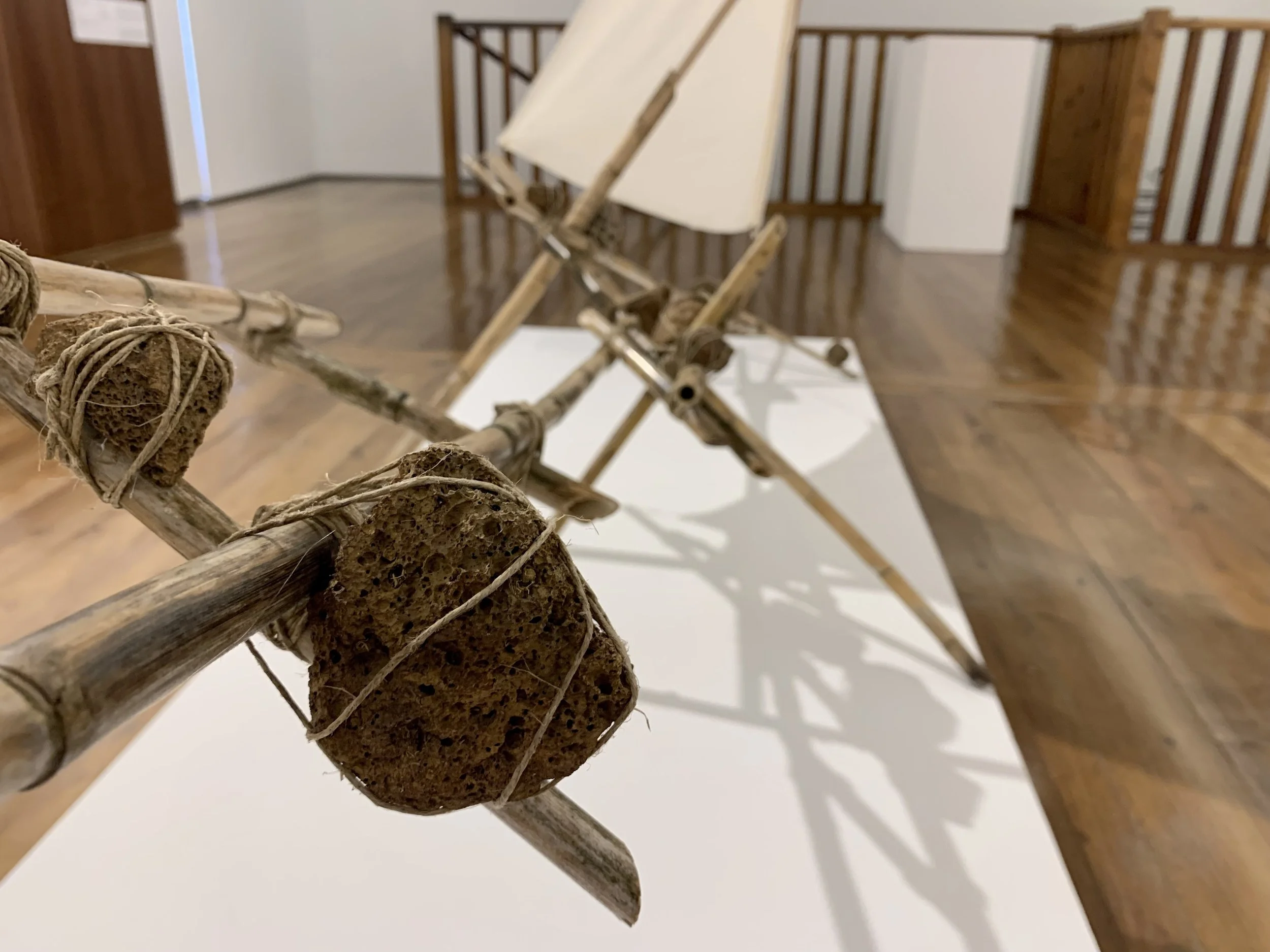
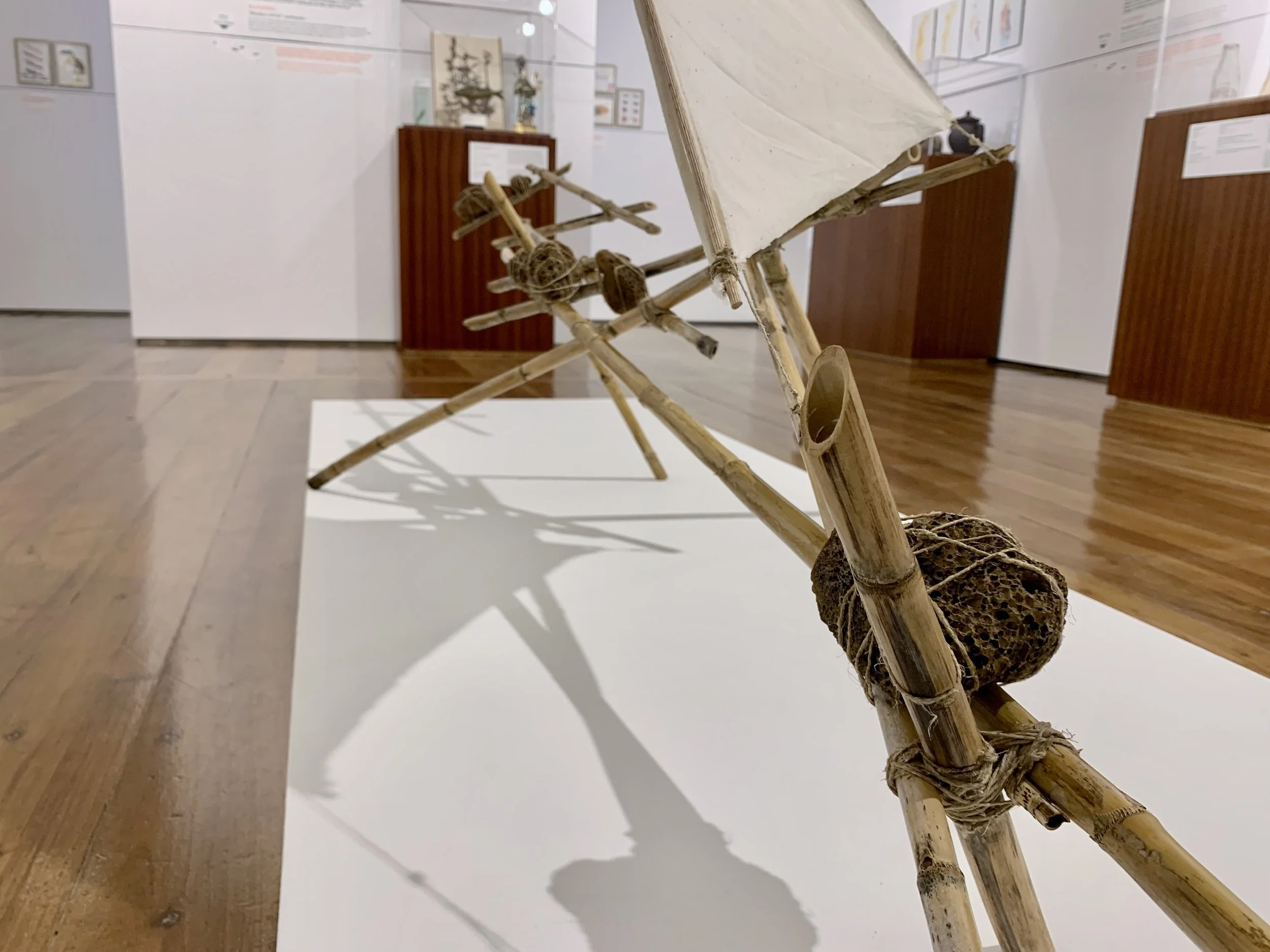
A seven-foot long sculpture, titled Raft of Pumice (Azores Archipelago) forms the centerpiece of the installation. As an abstract representation of the archipelago, the nine islands are depicted in pumice rocks held together by a latticework of bamboo, roughly indicating tectonic boundaries and maritime routes. An additional three perpendicular bamboo segments rising from the ground represent the three capitals of the Autonomous Region of the Azores, as well as their collective volcanic origins. The entire structure resembles a ship and is (theoretically) capable of floating, suggesting navigation through adversity via archipelagic interdependence.
An eight-minute film, titled Assembly of an Archipelago, juxtaposes footage from the assembly of a half-size model of the sculpture alongside “chronological” footage from the sites of the six catastrophes. Below is an excerpt, depicting footage from Vila Franca do Campo (site of a 1522 earthquake) and Furnas (site of a 1630 eruption).